
The Art of the First Impression: Why Your Facade Matters
Imagine walking down a quiet suburban street or a bustling urban avenue. What makes you stop and stare at a particular building? It is rarely the interior layout or the brand of the kitchen appliances, as those are hidden from view. Instead, it is the skin of the building—the facade. The exterior facade is the storyteller of architecture. It communicates the personality of the inhabitants, the purpose of the structure, and the creative vision of the designer long before anyone steps through the front door.
SUBMIT YOUR DETAILS FOR
For decades, we were limited to a handful of choices: red brick, white siding, or gray stucco. But we are living in a new era of architectural freedom. Today, custom exterior facade materials allow us to blend technology with nature, and durability with breathtaking aesthetics. Whether you are building a legacy home from scratch or giving an old structure a modern soul, choosing the right material is the most significant design decision you will make. Let’s embark on a journey through the world of premium custom facades and discover how to dress your home in a way that stands the test of time.
The Timeless Elegance of Natural Stone
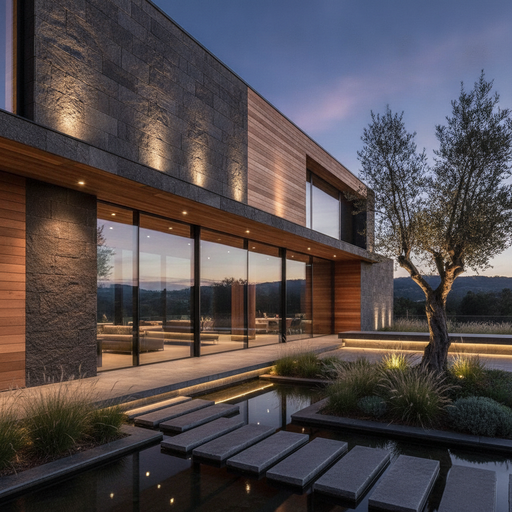
There is something deeply grounding about natural stone. It feels permanent, echoing the mountains and cliffs from which it was hewn. When we talk about custom stone facades, we aren’t just talking about thin veneers found in big-box stores. We are talking about precision-cut limestone, rugged granite, and the warm, earthy tones of travertine.
One of the most beautiful aspects of using natural stone is its uniqueness. No two slabs are identical. Each piece carries millions of years of geological history, featuring intricate veining and color shifts that a machine simply caot replicate. For a modern minimalist look, many architects are opting for large-format limestone panels with “zero-joint” installations, creating a seamless, monolithic appearance that looks like the building was carved from a single block of earth.
However, stone is more than just a pretty face. It is incredibly thermally efficient. In the heat of the summer, a thick stone facade keeps the interior cool, and in the winter, it retains warmth. While the initial investment is higher than synthetic alternatives, the longevity of stone—often lasting centuries—makes it a sustainable and value-adding choice for any luxury property.
Modern Industrialism: The Rise of Metal Cladding
If natural stone is the “old soul” of facade materials, metal is the “iovator.” In recent years, we have seen a massive shift toward metal cladding in residential design. Materials like zinc, copper, and architectural-grade aluminum are no longer reserved for skyscrapers and factories.
What makes metal so captivating is its ability to change. Take copper, for example. When first installed, it glows like a new pey. Over the years, as it interacts with the air and rain, it develops a stuing green patina that protects the metal underneath. It is a living facade that matures alongside its owners. Zinc offers a similar journey, transitioning from a shiny silver to a sophisticated, velvety blue-gray.
For those who prefer a more consistent look, powder-coated aluminum offers an endless palette of colors and textures. You can even find aluminum panels that mimic the grain of wood so perfectly that you have to touch them to realize they aren’t timber. Metal is lightweight, fire-resistant, and requires almost zero maintenance, making it perfect for the busy homeowner who wants a cutting-edge aesthetic without the weekend chores.
The Warmth of Custom Wood and the Shou Sugi Ban Technique
Wood has a psychological warmth that no other material can match. It softens the hard lines of modern architecture and coects the home to its natural surroundings. But wood has always had a weakness: the elements. Sun, rain, and insects are the natural enemies of timber—until now.
Custom wood facades have been revolutionized by thermal modification and ancient preservation techniques. One of the most popular trends in high-end custom homes is Shou Sugi Ban, a Japanese method of charring wood. By burning the surface of cedar or larch, the wood becomes naturally resistant to fire, rot, and pests, all while gaining a deep, iridescent black texture that looks stuing against glass and concrete.
For those who want the look of wood without the maintenance, composite materials have come a long way. High-pressure laminates (HPL) and wood-plastic composites caow replicate the “clippings” and grain patterns of exotic hardwoods like Ipe or Teak, providing a sustainable alternative that won’t warp or fade under the harsh sun.
High-Tech Surfaces: Sintered Stone and Large-Format Porcelain
We are currently witnessing a revolution in material science with the advent of sintered stone and ultra-compact surfaces. Brands like Dekton and Neolith have changed the game by creating materials that are virtually indestructible. These slabs are made by subjecting minerals to extreme pressure and heat, mimicking the natural process of stone formation in a matter of hours.
The result is a material that is non-porous, UV-resistant, and scratch-proof. From a design perspective, the possibilities are infinite. Do you want your home to look like it’s clad in white Carrara marble, but you live in a climate with freezing winters? Sintered stone can provide that look without the risk of cracking or staining. These panels can be produced in massive sizes, allowing for sleek, floor-to-ceiling designs that minimize grout lines and create a truly futuristic silhouette.
Fiber Cement and High-Performance Concrete
Concrete is often thought of as a heavy, structural material, but in the world of custom facades, it has become incredibly versatile. Glass Fiber Reinforced Concrete (GFRC) allows for thin, lightweight panels that can be molded into any shape or texture. Imagine a facade with 3D geometric patterns or waves that catch the shadows as the sun moves across the sky.
Fiber cement is the more accessible cousin to GFRC. It is a mixture of sand, cement, and cellulose fibers. It’s a “chameleon” material. It can be factory-painted in any color imaginable or textured to look like traditional lap siding, smooth stucco, or even stone. Because it is incredibly durable and resistant to warping, it has become the go-to choice for homeowners who want a custom look that balances cost-effectiveness with high-end performance.
Sustainable and Green Facades: The Living Wall
As we become more conscious of our environmental footprint, the facade is no longer just a barrier; it’s an ecosystem. “Living walls” or vertical gardens are becoming a staple in custom urban home design. By integrating irrigation systems and plant modules directly into the exterior skin, a home can actually help purify the air and provide natural insulation.
Beyond plants, sustainability is being built into the materials themselves. We are seeing a rise in the use of recycled glass panels, reclaimed brick from historic buildings, and bio-based resins. A custom facade today isn’t just about how it looks to the neighbors; it’s about how it respects the planet.
How to Choose the Right Material for Your Project
With so many options, the choice can feel overwhelming. To find your perfect match, consider these three pillars:
- Climate Context: If you live by the ocean, salt spray will eat through certain metals but will leave stone untouched. If you live in a desert, UV resistance is your top priority.
- Maintenance Appetite: Be honest with yourself. Do you enjoy the process of oiling wood every two years to keep its color, or do you want a “set it and forget it” solution like porcelain or metal?
- Architectural Language: A sleek, ultra-modern glass box might look jarring with heavy, rustic fieldstone. Try to choose materials that enhance the lines and volumes of your home’s specific design.
Conclusion: Your Home’s Final Word
Choosing a custom exterior facade is a journey of discovery. It is the process of finding the balance between the ruggedness required to face the elements and the beauty required to feed the soul. Whether you choose the ancient charcoal of Shou Sugi Ban, the futuristic sheen of zinc, or the eternal strength of granite, remember that your facade is more than just protection. It is a gift to the streetscape and a lasting legacy of your personal style. Invest in quality, embrace iovation, and let your home’s exterior tell a story worth listening to.