
The Journey to Your Dream Curb Appeal
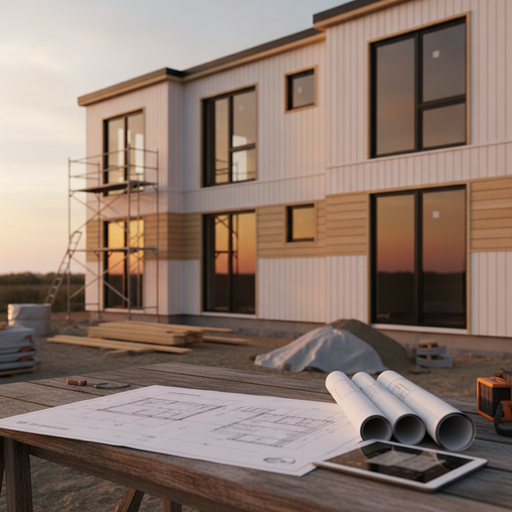
Imagine standing at the edge of a dusty lot, clutching a roll of blueprints that contain the blueprint for your future. You can almost see it: the way the morning light hits the natural stone veneer, the sharp contrast of black-trimmed windows against white siding, and the welcoming glow of a custom mahogany front door. This is the dream of a custom home exterior. However, between that vision and the final coat of paint lies a complex journey paved with schedules, budgets, and a thousand tiny decisions.
SUBMIT YOUR DETAILS FOR
For many homeowners, the exterior of a house is more than just a shell; it is a statement of identity and the primary shield against the elements. But two questions always loom large: “How long is this going to take?” and “How much is this going to cost me?” In this guide, we will walk through the realistic timeline and financial landscape of creating a custom home exterior, told through the lens of a journey from dirt to door-handle.
Phase 1: The Design and Permitting Stage (Months 1-3)
Before a single hammer swings, the “invisible work” must happen. This phase is often the most frustrating for homeowners because there is no physical progress to see on the lot, yet it is arguably the most critical for your budget and timeline.
The Architecture and Material Selection
It starts with a sit-down with your architect or designer. You aren’t just choosing colors; you are choosing longevity. Will you go with fiber cement siding (like James Hardie), which offers durability and fire resistance, or are you leaning toward the timeless but more expensive look of natural cedar? Every choice here impacts the “Cost” side of your ledger. Expect to spend 4 to 8 weeks refining these details. A custom exterior requires precise measurements for windows and specialized orders for unique materials that aren’t stocked at local hardware stores.
The Permitting Paperwork
Once your design is finalized, it goes to the local building department. Depending on where you live, this can take anywhere from three weeks to three months. In high-demand urban areas, permit backlogs are the number one “timeline killer.” You caot legally start your exterior shell until the city gives the green light. During this time, your builder should be securing quotes from subcontractors to lock in prices before inflation or supply chain shifts occur.
Phase 2: Framing and the Structural Shell (Months 4-6)
This is where the magic starts to happen. Suddenly, your lot is buzzing with activity. The framing phase is the “skeleton” of your exterior. It defines the shape of your rooflines, the placement of your windows, and the overall silhouette of the home.
Typically, framing takes about 4 to 6 weeks for a standard custom home. However, if your design includes complex features like vaulted entryways, heavy timber accents, or intricate roof valleys, this can easily stretch to 8 or 10 weeks. The cost here is largely driven by the price of lumber and the complexity of the labor. A simple gable roof is far cheaper and faster to frame than a multi-level hip roof with dormers.
Phase 3: The Weatherproofing and “Dry-In” Stage (Months 7-8)
In the construction world, “dried-in” is a major milestone. This means the house is protected from the rain, allowing interior work to begin while the exterior finishes are applied. This phase involves three major components:
- Windows and Doors: Custom windows can have lead times of 12 to 24 weeks. If they aren’t ordered during Phase 1, your entire project stops here. Installation usually takes 1 to 2 weeks.
- The Roof: Whether you choose asphalt shingles, metal standing seam, or slate, the roof usually takes 1 to 2 weeks to complete. Metal roofs are more expensive (often double or triple the cost of shingles) but offer a lifetime of durability.
- House Wrap and Flashing: This is the “raincoat” of your home. It’s a critical layer that prevents mold and rot. It’s a quick process (3-5 days) but requires high attention to detail.
Phase 4: Siding, Masonry, and Fine Details (Months 9-11)
Now, the house begins to look like the 3D renderings you fell in love with months ago. This is where the bulk of your exterior budget is spent. Siding and masonry are labor-intensive processes. If you are doing a full brick or stone exterior, the masons may be on-site for over a month. If you are using composite siding, it might go faster, but the finishing—caulking, trimming, and painting—takes time to do correctly.
Consider the “labor-to-material” ratio. For example, natural stone is expensive to buy and very expensive to install because it requires skilled artisans. On the other hand, vinyl siding is cheap to buy and fast to install, but it may not provide the “custom” aesthetic you desire. Most custom homeowners find a middle ground with a mix of materials—perhaps stone accents on the porch with high-quality siding on the remaining elevations.
The Cost Breakdown: What Should You Budget?
While every project is different, we can look at the “Custom Exterior” as a percentage of your total build or a price per square foot. Generally, the exterior package (roof, windows, doors, siding, and trim) accounts for 20% to 30% of the total construction cost.
Low-End Custom ($40,000 – $70,000)
At this range, you are likely looking at high-quality vinyl or basic fiber cement siding, standard-sized black-frame windows (non-custom sizes), and architectural asphalt shingles. The design is likely simpler with fewer “bump-outs” or complex rooflines.
Mid-Range Custom ($70,000 – $150,000)
This is the sweet spot for many custom builds. It includes a mix of materials: fiber cement siding, some stone or brick veneer accents, a high-end front entry door, and perhaps a metal roof accent over the porch. Windows are higher quality with better energy efficiency ratings.
High-End Luxury ($150,000 – $300,000+)
The sky is the limit here. We are talking full natural stone facades, slate or copper roofing, massive custom-shaped windows, and automated exterior lighting systems. The labor alone for these projects is a significant investment, as it requires specialized craftsmen who understand how to work with premium materials.
Factors That Can Shipwreck Your Timeline and Budget
No story is complete without a few obstacles. When building a custom exterior, three main “villains” can disrupt your plans:
1. The Weather: Siding and painting caot be done in extreme cold or heavy rain. A particularly wet spring can push your completion date back by weeks.
2. Change Orders: Deciding to change the window color or the stone type after the materials have been ordered is the fastest way to blow your budget and add months to the wait time.
3. Supply Chain Gaps: Even in a stable economy, certain “specialty” items like European-style windows or specific color batches of brick can be delayed at the factory.
Final Thoughts: The Reward of Patience
Building a custom home exterior is not a sprint; it is a marathon of decision-making and patience. From the first sketch to the moment you hang a wreath on your new front door, you are looking at a window of 10 to 12 months for a full custom build, with the exterior specific work spaing about 6 of those months.
While the costs can be daunting, remember that the exterior is what protects your investment. High-quality materials and professional installation don’t just look good—they reduce maintenance costs for decades to come. When you finally pull into your driveway and see your vision standing there in three dimensions, the months of plaing and the checks written will feel like a small price to pay for a place you are proud to call home.