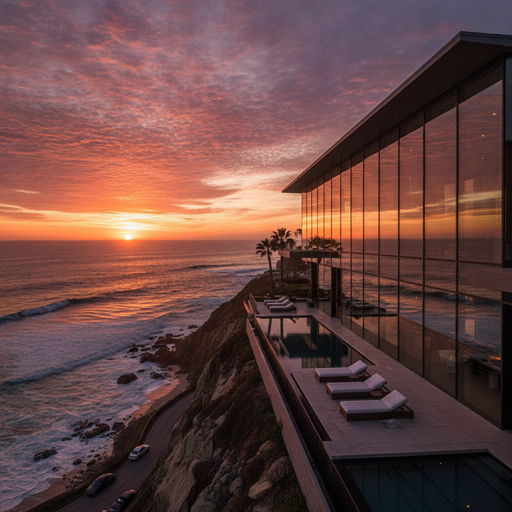

The Eternal Allure of the Golden Coast
Imagine waking up to the rhythmic sound of crashing waves, the salty mist of the Pacific Ocean gently hitting your face, and a panoramic view of a golden sunset that feels like it was painted just for you. This isn’t a scene from a Hollywood movie; it is the daily reality for a lucky few and the ultimate dream for millions more. In California, the beachfront home is more than just real estate; it is a symbol of success, a sanctuary of wellness, and a high-stakes investment that seems to defy the laws of economic gravity.
SUBMIT YOUR DETAILS FOR
For decades, the California coastline has been one of the most coveted stretches of land in the world. From the rugged cliffs of Big Sur to the sun-drenched sands of Malibu and the laid-back luxury of Laguna Beach, the demand for a piece of the Pacific has never truly wavered. However, in recent years, we have witnessed a fascinating evolution in this market. Despite rising interest rates, economic shifts, and the looming conversations around climate change, the hunger for California beachfront housing is hitting new heights. Let’s dive deep into what is driving this relentless demand and what it means for the future of the Golden State’s most exclusive neighborhoods.
The Post-Pandemic Shift: From Vacation Home to Primary Sanctuary
There was a time when a beachfront house in California was primarily a secondary residence—a place for weekend getaways or summer vacations. However, the global pandemic fundamentally shifted our relationship with our homes. As the “work from anywhere” culture took root, particularly among high-net-worth individuals in the tech and finance sectors, the proximity to a downtown office became secondary to the quality of life.
Suddenly, the beach house wasn’t just a retreat; it became the office, the school, and the gym. This migration of wealth from urban centers like San Francisco and Los Angeles to coastal enclaves has created a “permanent residency” boom. People realized that if they had to be stuck at home, they wanted that home to be facing the ocean. This shift has locked up inventory, as buyers are no longer looking to flip these properties or rent them out, but to live in them long-term.
The Scarcity Factor: Geography is the Ultimate Barrier
The primary driver of demand in any market is the balance between supply and demand. In the case of California beachfront property, the supply is naturally and legally capped. Unlike suburban developments that can sprawl further into the desert or mountains, there is only so much coastline available. You caot “build more” oceanfront land.
Furthermore, California’s strict zoning laws and the influence of the California Coastal Commission make new developments incredibly rare and difficult to approve. When you combine a fixed, finite supply with a growing global population of wealthy investors, the result is a perpetual seller’s market. Every time a beachfront lot is sold, it is often seen as the last of its kind, driving prices to astronomical levels.
The Lifestyle Premium: Wellness and Prestige
Beyond the bricks and mortar, California beachfront housing is selling a lifestyle that is increasingly focused on wellness. Modern luxury buyers are prioritizing health, air quality, and access to nature. The “blue mind” effect—the scientific idea that being near water improves mental health and reduces stress—has become a major selling point for real estate agents.
There is also the undeniable element of prestige. Owning a home on Carbon Beach in Malibu or on the “Gold Coast” of Orange County is an entry into an elite social circle. These homes are “trophy assets,” much like a rare Picasso or a limited-edition supercar. For many, the demand isn’t just about having a place to sleep; it’s about owning a piece of the California Dream that is recognizable worldwide.
The Rise of the “Safe Haven” Investment
In times of economic volatility, investors look for tangible assets that hold value. California real estate, particularly on the coast, has historically shown incredible resilience. Even during market downturns, beachfront properties tend to lose less value and recover much faster than inland homes.
Institutional investors and international buyers see California coastal land as a “safe haven.” With the US dollar remaining strong and the state’s economy being the fourth largest in the world if it were a country, the long-term appreciation potential is too significant to ignore. For many buyers, the demand is driven by the logic that “they aren’t making any more of it,” making it a hedge against inflation.
Environmental Realities: Risk vs. Reward
It would be impossible to discuss the demand for California beachfront housing without addressing the elephant in the room: climate change and coastal erosion. Rising sea levels and intensifying storms are real threats to these properties. You might think this would dampen demand, but interestingly, the market tells a different story.
While some buyers are becoming more cautious, performing extensive due diligence on sea walls and elevation, the demand remains robust. This is largely due to the “now or never” mentality. Many buyers are willing to accept the environmental risks for the privilege of living on the edge of the world today. Additionally, significant investments are being made in architectural iovation—homes designed on stilts or with advanced materials that can withstand the elements—further fueling the desire for modern, resilient coastal architecture.
Regional Hotspots: Where the Demand is Peaking
- Malibu: Still the king of coastal luxury. With its proximity to Hollywood and tech hubs, Malibu continues to see record-breaking sales, often exceeding $100 million for single-family estates.
- Orange County (Newport & Laguna Beach): Known for its pristine coves and master-plaed luxury, this area attracts families looking for the perfect blend of safety, schools, and surf.
- Santa Barbara: Often called the “American Riviera,” the demand here is driven by those seeking a more Mediterranean climate and a slower, more sophisticated pace of life.
- The Central Coast: Areas like Carmel-by-the-Sea are seeing a surge in demand from Silicon Valley executives looking for a foggy, artistic escape from the high-pressure tech world.
The Future of the Beachfront Market
As we look toward the future, the demand for California beachfront housing shows no signs of cooling down. While higher interest rates have slowed the broader real estate market, the ultra-luxury coastal segment often operates on cash, making it immune to traditional mortgage fluctuations. We are likely to see a continued emphasis on “smart” coastal homes—properties that integrate sustainable energy with high-end luxury.
The demographic of the buyer is also getting younger. Tech entrepreneurs in their 30s and 40s are replacing the traditional retired executive, bringing with them a desire for modern aesthetics, home automation, and sustainable building practices. This new generation of wealth is ensuring that the competition for every square inch of the Pacific coast remains fierce.
Conclusion: The Dream Endures
The story of California beachfront housing is a story of human desire. It is the intersection of limited geography, immense wealth, and a cultural obsession with the ocean. Despite the high costs, the regulatory hurdles, and the environmental challenges, the pull of the Pacific remains an irresistible force. As long as the sun sets over the ocean and the waves hit the shore, the demand for a home on the California coast will continue to be one of the most powerful drivers in the global real estate market. For those who can afford it, there is simply no substitute for living where the land meets the sea.