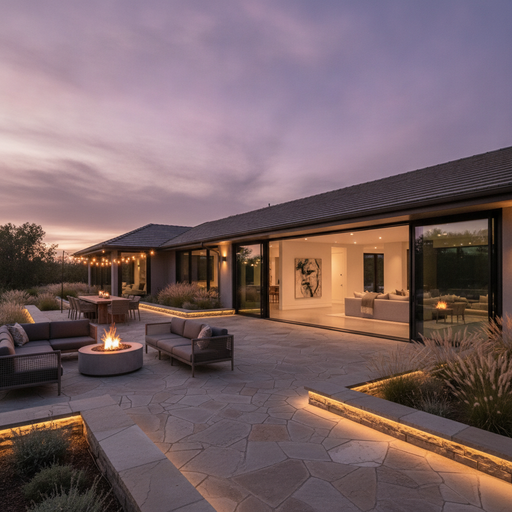

Imagine walking through your living room on a warm Saturday afternoon. The sun is filtering through the windows, and with a simple slide of a glass door, you step out onto a space that feels like a natural extension of your home. This is the magic of a well-designed ranch home patio. Ranch-style houses, born in the 1930s and peaking in popularity during the post-war era, were always meant to embrace the outdoors. Their low profiles and sprawling footprints practically beg for an outdoor living area that complements their horizontal silhouette.
SUBMIT YOUR DETAILS FOR
However, many ranch homes today still feature the “original” patio—a small, cracked concrete square that barely fits a grill and a couple of plastic chairs. If you are looking to elevate your lifestyle and increase your home’s value, it is time to rethink that space. Designing a patio for a ranch home is not just about laying down some stones; it is about storytelling, creating flow, and making the most of that unique single-story coection to the earth.
Understanding the Ranch Aesthetic
Before you pick up a shovel or browse through catalogs of outdoor furniture, it is essential to understand why ranch homes work so well with patios. The “Ranch” or “Rambler” style is defined by its long, low roofline and its emphasis on informality. Unlike two-story colonial homes that feel separated from the yard, the ranch house sits close to the ground. This creates a unique opportunity for “seamless transition.”
When designing your patio, you want to honor those horizontal lines. A patio that is too elevated or features heavy, vertical structures might clash with the house’s architecture. Instead, think about wide, sprawling surfaces that mirror the footprint of the home. By using materials and levels that stay close to the grade of your yard, you maintain that classic, grounded feeling that makes ranch homes so inviting.
Creating a Seamless Indoor-Outdoor Flow
One of the biggest mistakes homeowners make is treating the patio as an isolated “island” in the backyard. In a ranch home, the patio should feel like another room of the house. The best way to achieve this is through visual continuity. Have you ever noticed how a room feels bigger when the flooring matches the hallway? The same principle applies here.
Consider the flooring inside your home near the exit. If you have light oak hardwood, perhaps a light-colored natural stone or a warm-toned paver for the patio would create a smoother transition. If your ranch has those iconic large picture windows or sliding glass doors, don’t block them. Use them as the “lens” through which you view your outdoor sanctuary. By aligning the height of the patio surface as closely as possible to the interior floor level, you remove the physical and psychological barrier between inside and out.
Defining Functional Zones for Modern Living
Because ranch homes are often spread out, you likely have a long stretch of exterior wall to work with. Rather than creating one giant, empty rectangle of concrete, break the space into “zones.” This is a storytelling technique for your backyard; each area tells a different part of your daily life.
- The Outdoor Bistro: Place a dining set closest to the kitchen door. This makes alfresco dining effortless and prevents the “long haul” trek with heavy trays of food.
- The Conversation Pit: Further away, perhaps centered around a fire pit or a low coffee table, create a lounging zone with deep-seated sectional sofas. This is where the stories are told after the sun goes down.
- The Solitude Nook: In a quieter corner of the patio, maybe tucked behind some tall grasses or a decorative screen, place a single hammock or a comfortable reading chair. Everyone needs a place to escape.
By defining these zones with outdoor rugs, different furniture groupings, or even slight changes in the paving pattern, you make a large patio feel cozy and purposeful rather than cavernous.
Choosing Materials That Last and Look Great
The materials you choose will dictate the “vibe” of your ranch home. Since ranch houses often feature brick, wood siding, or stone accents, you want a patio material that speaks the same language. Here are some top contenders:
Natural Flagstone
Flagstone is the gold standard for ranch homes. Its irregular shapes and earthy tones (blues, tans, and greys) provide a rustic yet sophisticated look that blends perfectly with the natural landscape. It feels “of the earth,” which is exactly where a ranch home wants to be.
Modern Pavers
If your ranch leans more toward the “Mid-Century Modern” side of the spectrum, sleek, large-format concrete pavers are the way to go. Look for square or rectangular shapes in charcoal or light grey. These clean lines emphasize the geometric simplicity of modern ranch architecture.
Stamped Concrete
For those on a budget, stamped concrete offers the look of stone or brick at a fraction of the cost. The key here is to choose a subtle pattern. Overly complex patterns can look busy and distract from the simple elegance of the home’s silhouette.
Landscaping: Framing Your Masterpiece
A patio without landscaping is like a picture without a frame. For a ranch home, the goal of landscaping should be to “anchor” the patio to the yard. Because the house is low, you want to avoid planting massive trees too close to the patio, as they can dwarf the home and make it feel dark.
Instead, opt for layered plantings. Use low-growing shrubs and pereials near the edge of the patio to soften the hard lines of the stone. Ornamental grasses are a fantastic choice for ranch homes; they add movement and texture without blocking the view. If you need privacy, consider a “living wall” of arborvitae or a modern horizontal slat fence, which echoes the horizontal theme of the house.
The Power of Lighting and Atmosphere
The story of your patio shouldn’t end when the sun sets. In fact, for many, the evening is when the patio truly comes alive. Lighting for a ranch patio should be subtle and layered. Avoid harsh floodlights that wash out the space.
Start with “path lighting” to guide guests safely from the house to the various zones. Then, add “ambient lighting.” String lights (often called Edison bulbs) draped over a dining area create an instant festive mood. For the conversation zone, consider “under-cap” lighting if you have built-in seating or retaining walls. This creates a soft glow that highlights the textures of your patio materials without blinding your guests. Finally, “accent lighting” can be used to uplight a beautiful tree or a piece of garden art, adding depth to the backyard at night.
Seasonal Versatility: A Patio for All Reasons
A great patio design takes the change of seasons into account. In many parts of the country, ranch homes are subjected to hot summers and chilly winters. To make your patio a year-round destination, you need to plan for the elements.
For the summer heat, a pergola is a classic addition. It provides shade without the heavy “closed-in” feeling of a solid roof. You can even grow climbing vines like wisteria or jasmine over it for natural cooling. For the cooler months, a built-in stone fireplace or a portable Corten steel fire pit becomes the heartbeat of the backyard. There is something primal and comforting about sitting around a fire, and it extends your patio season by several months.
Conclusion: Living the Ranch Dream
Designing a patio for your ranch home is more than a construction project; it is an investment in your well-being. By respecting the architectural DNA of your home—its low lines, its opeess, and its simplicity—you can create an outdoor space that feels like it has always been there. Whether you are hosting a summer barbecue, reading a book in the quiet morning air, or watching the stars by a crackling fire, your new patio will be the stage where your family’s best memories are made. Start small if you must, but dream big, and let your ranch home finally reach its full potential as a true indoor-outdoor sanctuary.