
The Magic of the California Horizon
Imagine waking up as the soft, golden light of the Pacific sun filters through floor-to-ceiling glass walls. You step out from your bedroom directly onto a warm wooden deck, the scent of jasmine and sage lingering in the air. This isn’t just a scene from a luxury travel brochure; it is the daily reality of the contemporary California lifestyle. For decades, California has been the epicenter of architectural iovation, blending the state’s diverse geography with a rebellious spirit that refuses to be boxed in by traditional European standards.
SUBMIT YOUR DETAILS FOR
Today, contemporary California housing styles are undergoing a fascinating evolution. While the state still pays homage to its mid-century roots and Spanish heritage, a new wave of design is emerging—one that prioritizes sustainability, technological integration, and a profound coection to the natural environment. Whether you are walking through the hills of Silver Lake, the coastal bluffs of Malibu, or the suburban expanses of Orange County, the architecture tells a story of adaptation and beauty. Let’s explore the defining styles that are shaping the West Coast landscape today.
The Seamless Flow: California Modernism Redefined
If there is one hallmark of contemporary California design that stands above the rest, it is the “indoor-outdoor flow.” This isn’t just a buzzword; it’s a structural philosophy. Modern homes in the Golden State are designed to make the transition from the living room to the backyard almost invisible. Architects achieve this through massive sliding glass doors—often pocketed so they disappear into the walls—and matching flooring materials that extend from the interior to the patio.
In this style, the floor plan is almost always open. The kitchen, dining, and living areas merge into a single “great room,” illuminated by natural light. The contemporary twist on this classic modernist approach involves using more organic materials. While the 1950s focused on steel and laminate, today’s California Modern homes utilize reclaimed white oak, raw concrete, and hand-applied plaster to create a space that feels warm and “human” rather than cold and industrial.
The Modern Farmhouse: A West Coast Phenomenon
You caot drive through a Los Angeles or San Diego neighborhood without seeing the striking silhouette of the Modern Farmhouse. While this style has roots across the United States, California has given it a distinct coastal edge. Characterized by high-pitched gabled roofs, crisp white board-and-batten siding, and industrial black-framed windows, this style offers a perfect blend of nostalgia and sleek modernity.
The contemporary California version of the farmhouse often ditches the “shabby chic” interior for something much more refined. Think minimalist cabinetry, matte black fixtures, and expansive “walls of glass” that look out over drought-tolerant landscaping. It’s a style that feels grounded and family-oriented, yet sophisticated enough for the most high-end zip codes. It provides a sense of “home” in a world that is becoming increasingly digital and fast-paced.
Desert Modernism and the Palm Springs Influence
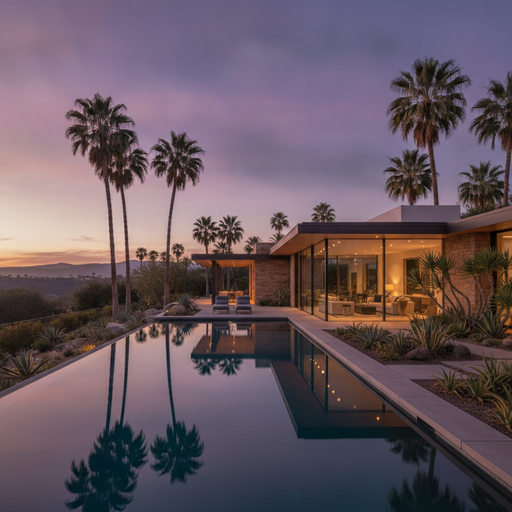
As we move inland toward the Coachella Valley, contemporary architecture takes on a sharper, more geometric form known as Desert Modernism. This style is heavily influenced by the harsh yet beautiful desert climate. These homes are often low-slung, with flat rooflines and deep overhangs designed to provide shade from the intense sun.
Contemporary desert homes utilize “thermal mass” materials like thick concrete or stone to naturally regulate temperature. The color palettes are inspired by the surrounding landscape—muted tans, dusty pinks, and olive greens. One of the most striking features of this style is the “desert garden,” where traditional lawns are replaced by sculptural cacti, boulders, and decomposed granite. It is a masterclass in how architecture can respect and reflect its environment rather than trying to conquer it.
The Rise of the Stylish ADU (Accessory Dwelling Unit)
California’s housing market is notoriously tight, which has led to one of the most significant contemporary architectural trends: the Accessory Dwelling Unit, or ADU. Once known simply as “gray flats,” today’s ADUs are high-design marvels. Because they are often built in the backyards of existing homes, architects have had to get incredibly creative with small-footprint living.
These mini-homes often feature lofted sleeping areas, built-in multipurpose furniture, and large windows to make a 500-square-foot space feel like 1,500. They have become a playground for contemporary experimentation, often featuring bold colors, experimental cladding like charred wood (Shou Sugi Ban), and smart-home technology. The ADU represents the California spirit of ingenuity—finding beauty and functionality in even the most limited spaces.
Eco-Conscious and Sustainable Design
In a state frequently challenged by droughts and wildfires, contemporary housing has had to become smarter. Sustainability is no longer an “extra” feature; it is built into the DNA of the home. Modern California houses are increasingly “Net Zero,” meaning they produce as much energy as they consume. This is achieved through integrated solar roof tiles, Tesla Powerwalls, and advanced insulation techniques.
But sustainability also shows up in the aesthetics. “Xeriscaping” (drought-resistant landscaping) has become the gold standard, replacing thirsty green grass with native California plants like Agave and Lavender. Inside, you’ll find low-VOC paints, recycled glass countertops, and greywater systems that repurpose shower water for garden irrigation. These homes prove that being eco-friendly doesn’t mean sacrificing luxury; in fact, the most sustainable homes in California are often the most technologically advanced and visually stuing.
Coastal Contemporary: Mastering the Pacific Edge
Along the coast, from Big Sur down to Laguna Beach, the “Coastal Contemporary” style reigns supreme. Unlike the “Cape Cod” style seen on the East Coast, California coastal homes are much more experimental. They often use materials that can withstand the salty air, such as cedar, copper, and specialized marine-grade steel.
The focus here is entirely on the view. Cantilevered balconies that seem to float over the ocean are common. Inside, the design is often “soft minimalism,” using light-colored woods and neutral textiles to ensure that nothing distracts from the blue of the Pacific. It is architecture that acts as a frame for the greatest artist of all: nature.
Conclusion: Why California Style Endures
Contemporary California housing styles are more than just a collection of design choices; they are a reflection of a culture that values freedom, light, and a coection to the earth. From the sleek lines of a Hollywood Hills mansion to the clever efficiency of a backyard ADU, the common thread is an unwavering focus on the “lived experience.”
As we look to the future, California architecture will likely continue to lead the way in merging technology with organic beauty. Whether you are a homeowner looking for inspiration or an architecture enthusiast, the Golden State offers a glimpse into a world where the walls between our shelters and our surroundings finally disappear. It is an invitation to live better, breathe deeper, and embrace the sun.