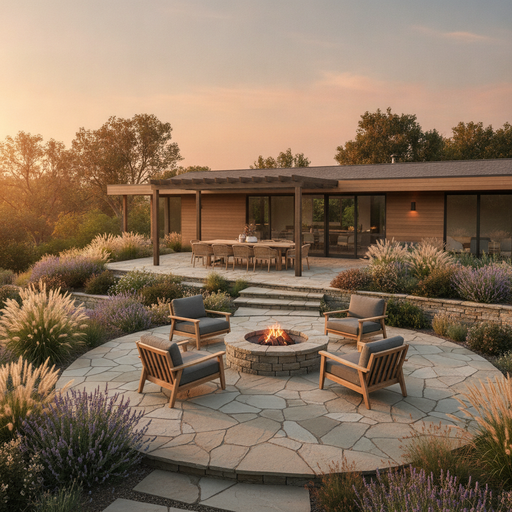

There is something inherently poetic about the American ranch home. With its long, low-slung profile and sprawling footprint, it reflects a sense of opeess and a coection to the horizon. However, that very opeess can often be a double-edged sword when it comes to the backyard. Many ranch owners find themselves looking out their sliding glass doors at a vast, flat expanse of grass that feels more like a vacant lot than a private sanctuary. If you have ever felt that your backyard is “too much space with too little soul,” you are not alone.
SUBMIT YOUR DETAILS FOR
Plaing a ranch backyard landscape requires a shift in perspective. Instead of fighting the horizontal nature of the architecture, we must embrace it while introducing layers, textures, and zones that provide a sense of intimacy. It is about creating a journey within your own property. Let’s walk through the process of transforming that blank canvas into a multi-functional outdoor retreat that complements the unique charm of ranch-style living.
Understanding the Ranch Canvas: The Power of the Horizontal
The first step in plaing is acknowledging the architectural language of your home. Ranch houses are defined by their horizontal lines. To create a cohesive landscape, your design should echo these lines while occasionally breaking them to prevent monotony. When we look at a wide-open ranch yard, the eye tends to travel quickly across the space without stopping. Our goal is to create “eye anchors”—points of interest that encourage the viewer to slow down and appreciate the details.
Because ranch homes are typically single-story, you have a unique opportunity to create a seamless “indoor-outdoor” flow. The transition from your living room to your patio should feel like walking into another room of the house, just without the ceiling. This coectivity is the hallmark of successful ranch landscaping.
Zoning: Creating Rooms Without Walls
One of the biggest mistakes homeowners make with large, flat backyards is trying to do everything everywhere. This leads to a cluttered look. Instead, think of your backyard as a floor plan. Just as your house has a kitchen, a living room, and a bedroom, your backyard should have dedicated zones.
Start by identifying your priorities. Do you love hosting summer barbecues? You need a dedicated dining zone near the kitchen entrance. Do you crave a quiet place to read? A secluded “meditation corner” tucked away in a far corner might be the answer. By using different materials—such as a flagstone area for the dining set and a lush patch of grass for a play area—you visually define these spaces without needing tall fences or walls. Low-rise stone planters or a change in elevation (even just one or two steps) can also help distinguish one “room” from another.
Integrating Hardscapes: The Foundation of Function
Hardscaping is the “bones” of your landscape. For a ranch home, sprawling patios are often more appropriate than small, cramped decks. Since the house sits low to the ground, a ground-level patio made of natural stone, pavers, or stamped concrete feels like a natural extension of the foundation.
Consider a “linear” patio design that runs parallel to the back of the house. This reinforces the ranch aesthetic. To add character, you might incorporate a wood-burning fire pit or a modern linear gas fireplace. The warmth of the fire becomes a natural gathering point, extending the usability of your backyard into the cooler autumn months. If your budget allows, a built-in outdoor kitchen with a stone countertop can bridge the gap between the interior and the exterior, making outdoor entertaining effortless.
Layering Heights: Adding Vertical Interest
Since ranch homes are low, a flat yard can feel a bit one-dimensional. To fix this, you need to introduce vertical interest through “layered” planting. Imagine a staircase of greenery. Start with low-growing groundcovers near the patio, transition to mid-sized shrubs and ornamental grasses, and finish with taller privacy trees or a decorative pergola at the perimeter.
Ornamental grasses are particularly effective for ranch landscapes. They sway in the breeze, adding movement to an otherwise static environment, and their tawny colors in the winter provide year-round beauty. Think about planting heights in “waves” rather than straight lines to mimic the natural flow of the land. This softening of the edges makes the transition from the built environment to the natural one feel much more organic.
Privacy Without the Closed-In Feeling
Privacy is often a concern in ranch neighborhoods where houses are spread out but visibility is high. Traditional six-foot privacy fences can sometimes feel heavy and claustrophobic against a single-story home. A better approach is “living privacy.”
Strategic clusters of evergreens, such as Arborvitae or skip laurels, can create a screen that looks like part of the garden rather than a barrier. Another elegant solution is the use of a pergola or a trellis draped in climbing vines like wisteria or clematis. These structures provide a sense of enclosure and shade without blocking the airflow or the view of the sky. They create a “ceiling” for your outdoor room, which can make a large backyard feel much more cozy and secure.
The Modern Ranch Fire Pit and Water Features
Every great story needs a climax, and in a backyard, that climax is the focal point. For many, a fire pit is the heart of the home’s exterior. Whether it’s a rustic ring of boulders or a sleek, minimalist concrete table, the fire pit draws people together. Position it in a way that allows you to look back at the house and appreciate its long, glowing windows at night.
If you prefer tranquility over fire, a water feature can be transformative. The sound of trickling water masks neighborhood noise and brings a sense of peace. For a ranch home, a “pondless” waterfall or a simple stone bubbling fountain works best. These low-profile water features don’t obstruct views but add a sensory layer that makes the backyard feel like a true escape from the daily grind.
Sustainable Plaing: Xeriscaping and Native Plants
Modern ranch landscaping is increasingly leaning toward sustainability. Because ranch yards can be quite large, maintaining a perfect green lawn can be a massive undertaking in terms of water and time. This is where xeriscaping and native plant selection come into play.
Native plants are those that occur naturally in your region. They are acclimated to the local soil and climate, meaning they require less water, fewer pesticides, and less overall maintenance. Integrating large mulch beds with native pereials not only reduces your mowing time but also supports local pollinators like bees and butterflies. It turns your backyard into a living ecosystem that changes beautifully with the seasons.
Conclusion: Your Personal Horizon
Plaing the landscape for a ranch-style home is an exercise in balance. It is about honoring the wide-open spirit of the architecture while creating the intimate, functional spaces that modern life demands. By zoning your yard, layering your plants, and choosing materials that reflect the natural beauty of your surroundings, you turn a simple plot of land into a sanctuary.
Remember, a great landscape is never truly “finished.” It grows, breathes, and evolves alongside you. Start with a solid plan, focus on the flow from your back door, and slowly build the layers of your dream outdoor living space. Before you know it, you won’t just be looking at your backyard—you’ll be living in it.