
The Morning Sunshine and a New Begiing
Imagine waking up to the gentle rustle of palm fronds outside your window. The air is warm, even in January, and the sound of a distant lawnmower is the only thing breaking the peaceful silence of the morning. You walk into your modern, open-concept kitchen, brew a pot of fresh coffee, and step out onto your screened-in lanai. This isn’t a million-dollar beachfront mansion in Miami; it is a beautifully appointed manufactured home in a quiet 55+ community in Central Florida. For thousands of retirees, this isn’t just a dream—it is a daily reality that balances luxury, community, and financial freedom.
SUBMIT YOUR DETAILS FOR
For decades, the idea of “mobile home living” carried a certain stigma, often associated with outdated trailers and temporary housing. However, the modern Florida mobile home retirement lifestyle has undergone a massive transformation. Today, these communities are more akin to high-end resorts than parking lots. They offer a way to stretch retirement savings further than ever before while providing a social network that is hard to find in traditional suburbaeighborhoods. If you are looking for a way to enjoy your golden years without the crushing weight of a massive mortgage or high property taxes, it is time to take a closer look at the Sunshine State’s best-kept secret.
The Evolution of the Manufactured Home
First, let’s clear up a common misconception. The homes we are talking about today are officially known as “manufactured homes.” Built to strict federal HUD codes, these houses are durable, energy-efficient, and aesthetically indistinguishable from site-built homes once they are placed on their foundations. In Florida, these homes are designed to withstand the elements, featuring reinforced structures and modern building materials.
Walking into a new double-wide or triple-wide manufactured home is often a “wow” moment for retirees. You’ll find granite countertops, vaulted ceilings, walk-in closets, and spacious master suites. Many models even include “flex rooms” that can serve as a home office for your hobbies or a guest room for when the grandkids inevitably come to visit. The best part? These homes often cost a fraction of what a traditional condo or single-family home would cost in the same zip code. This allows retirees to trade in their large, high-maintenance northern homes for a brand-new, low-maintenance Florida residence and put the remaining equity into their travel fund or inheritance.
A Built-In Social Life: The Heart of the 55+ Community
Perhaps the greatest advantage of the mobile home lifestyle in Florida isn’t the house itself, but the community that surrounds it. One of the biggest challenges retirees face is social isolation. When you move to a traditional neighborhood, your neighbors might be busy families or working professionals who don’t have much time to socialize. In a Florida 55+ mobile home park, everyone is in the same season of life.
These communities are designed for interaction. Most feature a central clubhouse that serves as the hub of activity. On any given day, you might find:
- Morning water aerobics in a heated community pool.
- Competitive pickleball tournaments on professionally maintained courts.
- Potluck diers and themed dance nights.
- Card games, book clubs, and crafting circles.
- Organized bus trips to local casinos, theaters, or beaches.
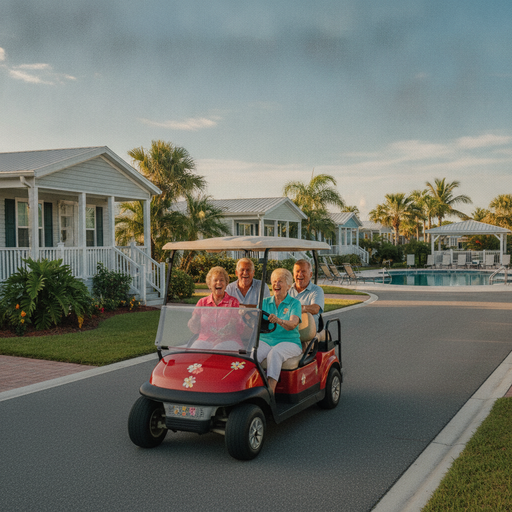
It’s often said that living in these communities feels like being back at summer camp, but with better amenities and no curfew. The sense of belonging is immediate. Neighbors look out for one another, and finding a partner for a morning walk or a golf cart ride to the sunset viewing point is as easy as stepping out your front door.
The Financial Advantage: Why Your Wallet Will Thank You
Florida has always been a tax-friendly state for retirees, with no state income tax and favorable inheritance laws. However, the mobile home lifestyle adds another layer of financial security. Most mobile home residents in Florida do not own the land their home sits on; instead, they “lease” the lot. While paying “lot rent” might seem counterintuitive at first, it often covers a wide range of expenses that would otherwise be separate bills.
Typically, your monthly lot rent includes:
- Property taxes on the land.
- Lawn maintenance and landscaping.
- Trash removal and sometimes basic cable or internet.
- Unlimited access to all community amenities (pools, gyms, courts).
- Security and gated entry.
When you add up what you would spend on a gym membership, pool maintenance, a landscaping service, and property taxes in a traditional home, the lot rent often proves to be an incredible value. This predictable monthly cost makes budgeting much easier for those on a fixed income, such as Social Security or a pension.
Location, Location, Location: From Coast to Coast
Florida is a diverse state, and the mobile home lifestyle can be tailored to your specific preferences. If you crave the salty air and the sound of waves, there are numerous parks along the Gulf Coast near places like Sarasota, Fort Myers, and Naples. Here, the lifestyle is laid-back, with a heavy emphasis on fishing, boating, and beachcombing.
If you prefer a more “Old Florida” feel with moss-draped oaks and freshwater lakes, the Central Florida region—around Lakeland, Ocala, and Lake Wales—is a paradise for hikers and birdwatchers. This area is often slightly more affordable and sits at a higher elevation, providing extra peace of mind during hurricane season. Meanwhile, the Atlantic Coast offers a more energetic vibe, with proximity to the Space Coast and the bustling amenities of the Daytona and Melbourne areas.
Practical Tips for Transitioning
If the idea of Florida mobile home living is starting to sound like the right move for you, there are a few practical things to keep in mind. First, decide whether you want to live in a “Resident-Owned” community (where you own the land) or a “Leased-Land” community. Both have pros and cons regarding upfront costs and long-term appreciation.
Second, do your homework on the park rules. Some communities are very strict about things like pet sizes, the age of vehicles, and exterior decorations. While this might seem restrictive, these rules are what keep the community looking pristine and ensure that property values remain stable. Finally, visit during the summer! Florida is beautiful in the winter, but you need to make sure you are comfortable with the humidity and heat of the “off-season” before making a permanent move.
The Choice for a Vibrant Future
Retirement is not the end of the road; it is the start of a new chapter. For many, that chapter is best written in the warm sun of Florida, surrounded by friends who feel like family and a home that doesn’t drain their bank account. The mobile home retirement lifestyle offers a unique blend of affordability, luxury, and social coection that is hard to match anywhere else in the country.
Whether you are spending your afternoon at the shuffleboard court, driving your golf cart to a neighbor’s house for happy hour, or simply enjoying the sunset from your porch, you’ll realize that you haven’t just found a place to live—you’ve found a place to thrive. In Florida, the “Golden Years” aren’t just a saying; they are a lifestyle reflected in every sunrise over the Atlantic and every sunset over the Gulf.