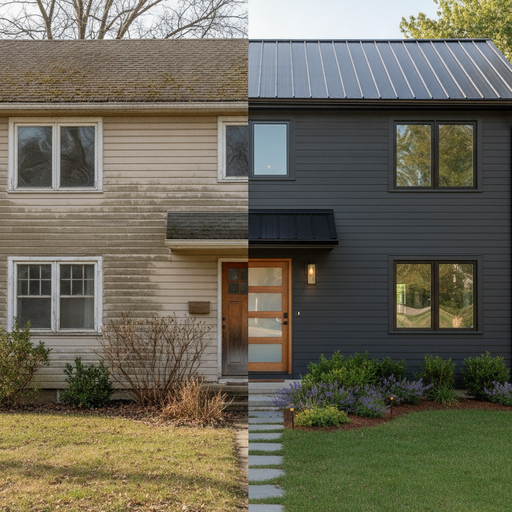

The Story of the Tired House on the Corner
Imagine walking down your street on a crisp autumn evening. You see houses with glowing windows, vibrant siding, and welcoming front porches. Then, you reach your own driveway. The siding looks a little duller than it used to, the front door has seen better days, and the roof—well, let’s just say it’s seen its fair share of storms. You love your home, but you know it’s time for a facelift. This is the moment many homeowners face: the realization that an exterior remodel is no longer a luxury, but a necessity.
SUBMIT YOUR DETAILS FOR
The biggest hurdle isn’t usually the design or the color palette; it’s the budget. Exterior remodeling can feel like a bottomless pit of expenses if you don’t have a clear roadmap. Whether you are looking to sell your home soon and want to maximize your ROI (Return on Investment) or you simply want to be the pride of the neighborhood, understanding the cost comparison between different projects is crucial. In this guide, we will walk through the most common exterior upgrades, comparing their costs, benefits, and long-term value.
Siding: The Protective Skin of Your Home
Siding is often the most significant part of an exterior remodel. It’s the first thing people notice, and it plays a vital role in protecting your home from the elements. However, the price gap between materials can be staggering.
Vinyl Siding: The Budget-Friendly Classic
For many homeowners, vinyl siding is the go-to choice. It’s affordable, comes in a thousand different colors, and requires very little maintenance. On average, a professional installation for a standard-sized home can cost between $8,000 and $16,000. It offers a decent ROI, usually reclaiming about 65% to 75% of its cost at resale. The downside? It can crack in extreme cold or melt if a rogue BBQ grill gets too close.
Fiber Cement (James Hardie): The Premium Alternative
If you have a bit more to spend, fiber cement is the gold standard. It mimics the look of real wood but is fire-resistant and incredibly durable. The cost usually ranges from $15,000 to $25,000 or more. While the upfront cost is higher, the “curb appeal” factor is significantly greater, and it often yields a higher ROI than vinyl because of its longevity and premium appearance.
Roofing: Your Home’s First Line of Defense
A roof is like a good pair of shoes—you don’t think about them until they start leaking, and by then, you’ve got a real problem. Replacing a roof is a major investment, but it’s one of the few projects that can offer nearly 100% peace of mind.
- Asphalt Shingles: This is the most common roofing material in the US. A new asphalt roof typically costs between $7,000 and $12,000. It lasts about 20 years and is relatively easy to repair.
- Metal Roofing: Increasing in popularity, metal roofs are the “buy it once” solution. They can last 50 years or more. However, be prepared for the price tag; a metal roof can cost anywhere from $15,000 to $35,000 depending on the type of metal and the complexity of your roofline.
While the metal roof is significantly more expensive, many homeowners find the cost-per-year breakdown much more favorable than asphalt. Plus, it can actually lower your cooling costs by reflecting solar heat.
Windows and Doors: The Eyes and Mouth of Your House
If you feel a draft every time the wind blows, your windows are likely the culprit. Replacing windows isn’t just about looks; it’s about energy efficiency and comfort. This is an area where costs vary wildly based on the number of units and the material used.
Vinyl vs. Wood Windows
Vinyl windows are the most common choice for replacements, costing roughly $600 to $900 per window (installed). They are energy-efficient and never need painting. Wood windows, on the other hand, offer a timeless beauty that vinyl can’t match, especially for historic homes. However, expect to pay $1,200 to $1,800 per window. Wood also requires ongoing maintenance to prevent rot.
The Front Door Transformation
Don’t underestimate the power of a new front door. It is consistently rated as one of the highest ROI projects you can do. A new steel entry door might cost $1,500 to $2,500, but it can completely change the look of your entryway and improve security. A high-end fiberglass door that looks like mahogany might cost $4,000, but the “wow” factor it provides to potential buyers is immense.
Outdoor Living: Decks vs. Patios
In the modern housing market, people don’t just want a house; they want a lifestyle. This is why outdoor living spaces have exploded in popularity. But should you build a deck or a patio?
The Wood or Composite Deck
Decks are great for sloped yards and provide a defined “outdoor room” feel. A pressure-treated wood deck might cost around $10,000 to $15,000. However, wood requires staining every few years. Composite decking (like Trex) is much more expensive—often $20,000 to $35,000—but it is virtually maintenance-free and lasts for decades.
The Concrete or Stone Patio
Patios are generally more affordable if your yard is flat. A simple poured concrete patio can be as low as $3,000, while a high-end natural stone or paver patio can reach $15,000. Patios generally have a slightly lower ROI than decks, but they offer incredible durability and a grounded, natural look.
Comparing ROI: Where Does Your Money Go?
When comparing remodeling costs, it’s helpful to look at the “Cost vs. Value” report. Not all projects are created equal. If you spend $20,000 on a project, how much of that will you actually see back when you sell the house?
- Garage Door Replacement: Historically one of the highest ROIs, often seeing over 90% return.
- Siding Replacement: Usually sees a 70% to 80% return.
- Window Replacement: Typically offers a 65% to 75% return, plus monthly energy savings.
- Major Landscaping: While it varies, professional landscaping can increase a home’s overall value by up to 10-12%.
How to Budget and Save
If looking at these numbers makes your head spin, remember that you don’t have to do everything at once. The best approach is “The Phased Remodel.” Start with the most critical structural items—the roof or the windows—to protect your interior. Then, move on to the aesthetic items like siding and landscaping.
To save money, consider “mid-grade” materials. You don’t always need the most expensive stone or the highest-end cedar. Modern manufacturing has created mid-range products that look premium but cost significantly less. Also, timing matters. Many contractors offer discounts during the “off-season” (late fall or early winter) to keep their crews busy.
Conclusion: Your Home, Your Investment
Exterior remodeling is about more than just numbers on a spreadsheet; it’s about the feeling of pride you get when you pull into your driveway. By comparing the costs of siding, roofing, windows, and outdoor living spaces, you can make an informed decision that balances your immediate budget with the long-term value of your home.
Whether you choose the budget-friendly path of vinyl and asphalt or the premium route of fiber cement and metal, the key is quality installation and a cohesive design. Your home is your most significant asset—give it the exterior it deserves, and it will reward you for years to come.