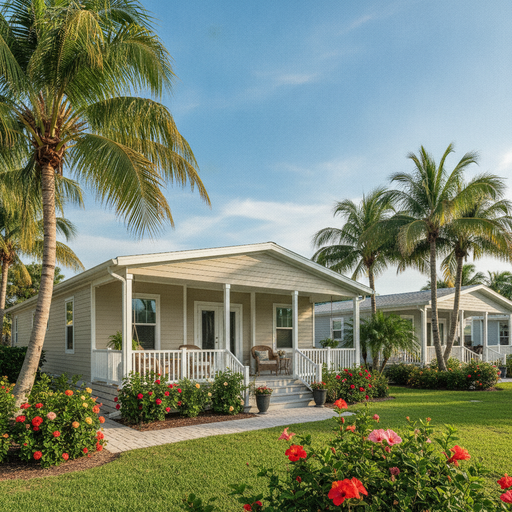

The Sun-Drenched Dream: Is Mobile Home Living in Florida Still Affordable?
Imagine waking up to the gentle rustle of palm fronds outside your window. The air is warm, the scent of salt water lingers in the distance, and your biggest decision of the day is whether to hit the golf course or the swimming pool. For decades, Florida has been the ultimate destination for those seeking a “slice of paradise.” But as traditional real estate prices in the Sunshine State skyrocket, many are asking themselves a critical question: Can I still afford to live here?
SUBMIT YOUR DETAILS FOR
The answer for many lies in the humble, yet increasingly modern, mobile home. Often referred to more accurately as “manufactured homes,” these dwellings have become the backbone of affordable living in Florida. But don’t let the old stereotypes fool you. Modern mobile home living isn’t just about saving peies; it’s about a lifestyle choice that offers community, convenience, and financial freedom. In this guide, we’re going to pull back the curtain on the real cost of living in a Florida mobile home, from the initial purchase to the monthly “hidden” expenses you need to know about.
The Entry Ticket: How Much Does a Mobile Home Actually Cost?
The first hurdle in your Florida journey is the purchase price. Unlike traditional “stick-built” homes that have seen median prices jump well over $400,000 in many Florida counties, mobile homes offer a much more accessible entry point. However, the price range is vast depending on what you are looking for.
If you are looking for a pre-owned home in a classic 55+ community, you might find older units starting as low as $50,000 to $80,000. These homes often require a bit of “TLC”—perhaps some new flooring or a modern kitchen backsplash—but they provide a functional roof over your head in a prime location. On the other end of the spectrum, brand-new, double-wide manufactured homes with luxury finishes, granite countertops, and spacious porches can reach $150,000 to $250,000.
When you compare this to a $500,000 traditional mortgage, the math starts to look very attractive. You aren’t just buying a house; you’re drastically reducing your debt-to-income ratio, which is the first step toward a stress-free Florida lifestyle.
The Great Debate: Lot Rent vs. Land Ownership
This is perhaps the most confusing part of Florida mobile home living for newcomers. In Florida, you generally have two options: buying a home in a “land-lease” community or buying the home and the land together.
The Land-Lease Model
In a land-lease community, you own the structure (the home), but you pay a monthly “lot rent” to the park owner. This fee typically covers your right to place the home on the lot, trash pickup, lawn maintenance, and access to community amenities like pools, clubhouses, and shuffleboard courts. In 2024, lot rents in Florida typically range from $600 to $1,200 per month. While this might seem like a high recurring cost, remember that it often replaces many costs associated with traditional homeownership, such as high property taxes and expensive HOA fees.
Owning the Land (Fee Simple)
If you prefer to own the dirt beneath your feet, you’ll need to look for “resident-owned” communities or private lots. While your upfront cost will be significantly higher—often double or triple the cost of a home in a leased park—your monthly “rent” disappears, replaced only by a small HOA fee and property taxes. For long-term stability, many retirees prefer this route to avoid potential lot rent increases.
Monthly Utilities: Keeping Cool in the Humidity
Florida’s climate is beautiful, but it is also relentless. The biggest utility expense you will face is electricity, specifically for your Air Conditioning (AC). Because mobile homes are ofteot as heavily insulated as concrete-block traditional homes, your AC will work hard during the humid summer months (June through September).
For a standard double-wide home, you can expect monthly electric bills to fluctuate between $120 in the winter and $250 in the peak of summer. Many savvy residents invest in “cool roof” coatings or updated window insulation to drive these costs down. Water and sewer bills are generally reasonable, often averaging $50 to $80 per month, though in some land-lease parks, these are included in your monthly lot rent.
The Hurricane Factor: Insurance and Taxes
Living in Florida means respecting the power of nature. When calculating your cost of living, insurance is a non-negotiable line item. Mobile home insurance in Florida has become more expensive in recent years due to increased storm activity. On average, you should budget between $1,500 and $3,000 per year for a comprehensive policy that includes windstorm coverage.
Property taxes are where mobile home owners often see the biggest savings. If you live in a land-lease community, you don’t pay traditional real estate taxes on the land; instead, you pay an aual “decal fee” or personal property tax on the unit itself, which is significantly lower—often just a few hundred dollars a year. However, if you own the land, you will be subject to standard Florida property taxes, though the state’s generous Homestead Exemption can help lower that burden if the home is your primary residence.
The Social ROI: Why People Stay
Beyond the numbers, there is an intangible “Return on Investment” (ROI) to Florida mobile home living: the community. Many of these parks, especially the 55+ age-restricted communities, are social hubs. When you pay your lot rent, you aren’t just paying for a patch of grass; you are paying for a social director, organized diers, water aerobics classes, and a neighborhood where people still look out for one another.
In a traditional neighborhood, you might go years without knowing your neighbor’s name. In a Florida manufactured home community, your neighbor is likely your doubles partner in pickleball. For retirees or those looking to downsize, the mental health benefits of this social structure are worth every pey of the monthly fees.
Hidden Costs and Maintenance Realities
No home is maintenance-free. With mobile homes, you need to be particularly mindful of the “Big Three”: the roof, the AC unit, and the “skirting” (the paneling around the base of the home). Florida’s sun can beat down on a roof, and the humidity can rust components over time. Setting aside a “rainy day” fund of $200 per month for future repairs is a smart move that prevents financial shocks down the road.
Additionally, keep in mind that older mobile homes (built before the HUD code changes in 1976) can be difficult to finance and more expensive to insure. If you are looking for the best long-term value, focus on homes built after 1994, when Florida significantly strengthened its wind-resistance requirements for manufactured housing.
The Verdict: Is It Worth It?
So, what is the bottom line? If you are looking for a way to live in Florida for under $2,500 a month (including your mortgage/purchase payment, lot rent, and utilities), mobile home living is one of the very few ways left to do it comfortably. While prices have risen alongside the rest of the country, the “gap” between traditional housing and mobile home housing remains wide.
For the teacher looking to retire, the remote worker wanting a change of scenery, or the snowbird escaping the northern frost, the mobile home lifestyle offers a unique blend of affordability and tropical luxury. It’s about trading a massive mortgage for more sunsets, and for many, that is a trade worth making every single time.
Final Thoughts for Prospective Buyers
Before you sign on the dotted line, do your homework. Visit multiple parks at different times of the day. Talk to the residents at the community pool—they will give you the “real scoop” on management and maintenance. Check the rules regarding pets and golf carts. Most importantly, have a professional inspection done, specifically looking at the tie-downs (which keep the home secure during high winds) and the vapor barrier under the home.
Florida is waiting for you. With a bit of plaing and a clear understanding of the costs, you can enjoy everything the Sunshine State has to offer without breaking the bank.