
The Art of the Grand Arrival: Why Your Ranch Driveway Matters
Imagine this: You’ve just finished a long day in the city, and as you turn off the main highway, the tires of your truck hit that familiar rhythm of your own private road. The dust kicks up slightly, the sun is dipping below the horizon, and you are framed by a landscape that says, “You’re home.” A ranch driveway is more than just a path from Point A to Point B; it is the prologue to your lifestyle. It’s the first impression guests receive and the daily ritual that transitions you from the chaos of the world to the serenity of your land.
SUBMIT YOUR DETAILS FOR
Designing a landscape for a ranch driveway presents unique challenges compared to suburban plots. We are dealing with scale, rugged terrain, and the need for designs that look intentional but feel natural. Whether you own five acres or five hundred, the way you frame your entrance sets the tone for the entire property. In this guide, we will explore how to blend functionality with breathtaking aesthetics to create a ranch driveway that stands the test of time.
1. Defining the Perimeter with Iconic Fencing
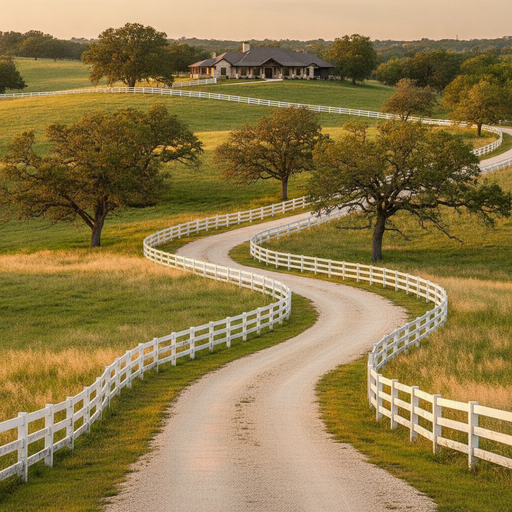
In the world of ranching, fences aren’t just about boundaries; they are the architectural bones of your landscape. For a classic American ranch feel, nothing beats the timeless look of a white three-rail or four-rail PVC or wood fence. It provides a clean, continuous line that draws the eye toward the main house.
If you prefer something more “old world” or rustic, consider split-rail fencing. It has an organic, jagged aesthetic that blends seamlessly into wooded areas or rocky terrains. For those looking for a modern touch, black steel pipe fencing offers a sleek, high-contrast look that pops against green pastures. The key is to run the fence parallel to the driveway for at least the first 100 yards to create a sense of chaeled perspective.
2. The Power of Native Plantings
One of the biggest mistakes ranch owners make is trying to plant delicate, high-maintenance garden flowers along a half-mile driveway. Not only is the irrigation a nightmare, but it often looks out of place. Instead, lean into native landscaping. Native plants are adapted to your local soil and climate, requiring less water and intervention.
- Tall Grasses: Varieties like Little Bluestem, Switchgrass, or Fountain Grass add movement. They sway in the wind, creating a “living” border that looks beautiful even in the winter.
- Wildflower Drifts: Scatter seeds for local wildflowers like Poppies, Lupines, or Black-eyed Susans. These create seasonal bursts of color that feel like a natural extension of the meadow.
- Drought-Tolerant Shrubs: Think Sagebrush, Lavender, or Yucca depending on your region. These provide year-round structure and texture without needing a hose every afternoon.
3. Selecting the Right Driveway Material
The material of your driveway dictates the “sound” and “vibe” of your ranch. While asphalt is smooth and easy to plow in winter, it can sometimes feel too industrial for a rustic setting. Many ranch owners prefer crushed stone or decomposed granite. These materials offer a satisfying crunch underfoot and come in various earth tones—from warm golds to cool silvers—that can match your local geology.
If you want the durability of pavement with the look of a rural road, consider “Chip Seal.” It involves a layer of asphalt topped with crushed stone. It gives you a hard, dust-free surface while maintaining the textured, natural appearance of a gravel road. For the ultimate luxury ranch look, use cobblestones or reclaimed brick just at the very entrance and near the house to “bookend” the journey.
4. Lighting the Path: Safety Meets Ambience
Ranches are beautiful by day, but they can be pitch black at night. Lighting your driveway is crucial for safety, but you don’t want it to look like an airport runway. The goal is “subtle illumination.”
Low-voltage LED path lights tucked into the grasses can guide the way without creating light pollution. Another popular technique is “moonlighting.” This involves placing cool-toned floodlights high up in large trees (like Oaks or Maples) along the drive, pointing downward. This mimics the soft glow of a full moon, casting beautiful shadows of the branches onto the ground below. For the entrance, consider two grand lanterns atop stone pillars to signal the gateway to your sanctuary.
5. Creating a Signature Entrance Gate
Your gate is the “handshake” of your property. It’s the first thing people touch or see up close. A ranch gate should be substantial. Consider a combination of natural stone pillars and heavy timber or custom ironwork. Many owners incorporate their family name or ranch brand into the ironwork for a touch of heritage.
To soften the look of a heavy gate, plant “anchor” trees on either side. A pair of weeping willows, stately oaks, or even symmetrical evergreens can frame the gate, making it feel like a part of the earth rather than a barrier placed upon it.
6. Managing the Scale with Visual Waypoints
If you have a very long driveway, it can become monotonous. To prevent this, create “visual waypoints.” These are small clusters of landscaping that break up the long stretches of road. It could be a small grove of trees, a large decorative boulder with some succulents, or even a vintage piece of farm equipment like an antique tractor or a restored wagon.
These waypoints give the eye a place to rest and make the drive feel like a curated tour of the property rather than a tedious commute. It also helps with depth perception, making the vastness of the ranch feel more intimate and managed.
7. The Importance of Drainage and Culverts
It’s not the most glamorous part of landscape design, but proper drainage is essential for ranch driveways. Ranches often deal with heavy runoff, and a washed-out driveway is a nightmare. Incorporate “dry creek beds” into your landscaping. Use various sizes of river rock to create a path for water to flow during heavy rains.
When designed correctly, these drainage ditches look like natural stony streams. You can plant moisture-loving plants like ferns or irises near the culvert exits to turn a functional necessity into a beautiful landscape feature.
8. Seasonal Interest: A Driveway for All Times
A great ranch driveway looks good in July and January. When choosing your trees and shrubs, think about the “four-season” rule. Use evergreens (like Cedars or Pines) to provide green structure during the winter. Add trees with brilliant fall color, like Maples or Aspens, to create a “tuel of gold” in the autumn. Spring-blooming trees like Dogwoods or Crabapples provide that much-needed burst of life after a long winter.
9. Creating a Sense of Mystery with Curves
If you are building a new driveway, avoid the straight line. A straight driveway can feel like a landing strip. Instead, follow the natural contours of the land. A winding driveway creates a sense of mystery—you never see the house all at once. Each bend reveals a new view of the pasture, a different angle of the pond, or a glimpse of the barn. This “reveal” is a classic landscape architecture trick that makes a property feel much larger and more sophisticated than it actually is.
Conclusion: Building a Legacy, One Mile at a Time
Designing the landscape for a ranch driveway is an exercise in patience and vision. It’s about working with the land, not against it. By choosing native plants, durable materials, and thoughtful lighting, you create an entrance that doesn’t just lead to a house—it leads to a home. Your driveway is the thread that sews the different parts of your land together. Make it a thread of gold, and you will find joy every single time you turn that steering wheel toward the sunset.