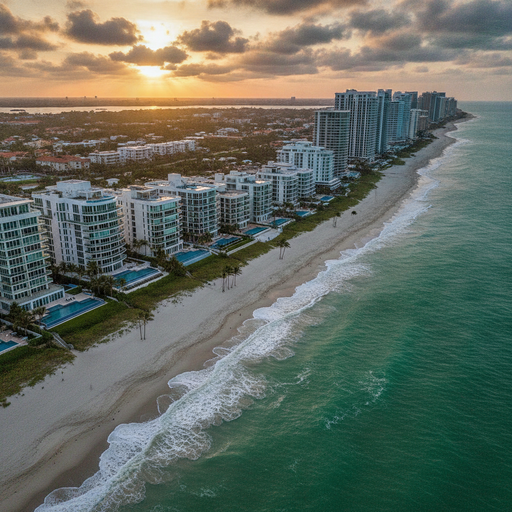

The Allure of the Salt Life: A New Chapter in Florida Real Estate
Imagine waking up to the rhythmic sound of the Atlantic crashing against the shore or watching the sun sink into the Gulf of Mexico from your private balcony. For decades, this dream has fueled one of the most vibrant real estate markets in the world. Florida’s coastal housing market isn’t just about square footage and granite countertops; it’s about a lifestyle defined by salt air, endless summers, and a sense of permanent vacation.
SUBMIT YOUR DETAILS FOR
However, if you have been watching the headlines lately, you know that the “Sunshine State” is experiencing a period of profound transformation. The days of lightning-fast flips and frantic bidding wars are evolving into something more complex. To understand where the Florida coastal market is headed, we have to look beyond the palm trees and dive into the economic, environmental, and social currents that are reshaping the shoreline.
The Great Migration: Who is Still Buying?
There was a time, not too long ago, when Florida was primarily seen as a retirement destination. While the “snowbirds” still flock south every winter, the demographic profile of the Florida coastal buyer has shifted dramatically. The rise of remote work untethered thousands of high-earning professionals from their office cubicles iew York, Chicago, and San Francisco, allowing them to bring their big-city salaries to the beach.
Today, we are seeing a “youthful” injection into coastal communities. Young families and tech entrepreneurs are looking for homes that offer high-speed coectivity alongside beach access. This shift has maintained a steady demand for luxury condos and single-family homes, even as interest rates fluctuated. These buyers aren’t just looking for a place to spend their golden years; they are looking for a primary residence where they can raise children and build businesses.
The Elephant in the Room: The Insurance Crisis
You caot talk about Florida coastal housing trends without addressing the massive shift in the insurance landscape. For many homeowners, the “cost of paradise” has taken on a literal meaning in the form of skyrocketing premiums. Following several years of intense storm activity and a complex legal environment, many private insurers have pulled back or left the state entirely.
This has created a two-tiered market. On one hand, you have the ultra-luxury buyers who often pay in cash and are less sensitive to insurance hikes. On the other hand, the middle-market coastal buyer is finding that their monthly carrying costs—driven by insurance and taxes—are sometimes doubling. This trend is forcing a new level of due diligence. Buyers are no longer just asking about the age of the roof; they are demanding to see elevation certificates and detailed insurance history before they even make an offer.
Building for Resilience: The New Architectural Standard
In response to environmental challenges, we are witnessing a fascinating evolution in how homes are built along the coast. The “Florida Vernacular” style is being updated with 21st-century engineering. New developments are moving away from the ground-level ranch style of the 1970s and toward elevated structures built on high-strength pilings.
Current trends show a massive preference for “hardened” homes. This includes:
- Impact-resistant windows that can withstand hurricane-force winds without the need for shutters.
- Reinforced concrete construction instead of traditional wood framing.
- Smart home systems that can monitor water leaks and power surges in real-time.
- Sustainable landscaping that uses native plants to manage salt spray and prevent erosion.
While these features add to the initial cost of the home, they are becoming essential for long-term value retention. In the current market, a “storm-ready” home is a much faster sell than a vintage coastal cottage that hasn’t been updated.
The Condo Market: Post-Surfside Regulations
The tragic collapse of the Champlain Towers South in Surfside changed the Florida condo market forever. In the years since, the state has implemented rigorous new inspection requirements and mandatory reserve funding laws. For years, many older condo associations kept monthly fees low by deferring maintenance. Those days are over.
We are currently seeing a trend where older coastal condos are seeing a surge in “special assessments” to cover necessary structural repairs. This has led to a fascinating market dynamic: a temporary glut of older condo units hitting the market as owners look to exit before the bills come due. Conversely, new construction condos that meet all the modern safety standards are commanding record-high prices. For the savvy investor, this means the coastal condo market requires more scrutiny than ever before.
Inventory and Pricing: A Return to “Normalcy”?
For the first time in years, the “Sold in 24 Hours” sign is becoming less common. Inventory levels along the Florida coast are slowly creeping back up. Sellers who were used to naming their price are now finding that they have to be more strategic. We are entering a “normalization” phase where buyers have a bit more breathing room to negotiate.
However, don’t expect a crash. The limited supply of land directly on the water acts as a natural floor for property values. You can build more houses inland, but you can’t build more coastline. Areas like West Palm Beach, Naples, and the Florida Panhandle continue to see sustained interest, particularly as these areas invest heavily in their own infrastructure and downtown amenities.
The Rise of “Hidden” Coastal Gems
As prices in Miami and Naples reach the stratosphere, buyers are looking elsewhere to get more “beach for their buck.” This has led to a trend of exploring under-the-radar coastal towns. Places like New Smyrna Beach, Vero Beach, and the coastal stretches of Citrus and Hernando counties are seeing increased interest.
These areas offer a slower pace of life and a “Old Florida” feel that is disappearing in the more commercialized hubs. Investors are particularly keen on these areas, betting that as the major metros become too expensive, the next wave of residents will push into these secondary coastal markets.
Conclusion: Is the Dream Still Alive?
The Florida coastal housing market is undoubtedly in a state of flux, but its fundamental appeal remains unshaken. The combination of no state income tax, a pro-business environment, and, of course, that world-famous weather continues to pull people toward the shore.
Navigating this market today requires a different strategy than it did five years ago. It requires a focus on resilience, an understanding of new legislation, and a realistic view of carrying costs. For those who do their homework, owning a piece of the Florida coast remains one of the most rewarding investments—both financially and for the soul. The tides may change, and the winds may blow, but the lure of the Florida coast is as eternal as the ocean itself.