
The Soul of a House: Why Exterior Materials Matter
Imagine walking down a quiet suburban street or a winding mountain road. Your eyes naturally drift toward the houses that line the path. Some blend into the background, while others seem to hum with a personality of their own. Have you ever wondered why? It’s rarely just about the shape of the roof or the size of the windows. The real magic lies in the texture, the color, and the “skin” of the building—the custom exterior materials.
SUBMIT YOUR DETAILS FOR
Choosing exterior materials isn’t just a construction task; it’s like choosing the right outfit for a lifelong first impression. It’s the storytelling element of architecture. When you select a custom finish, you are deciding how your home will age, how it will stand up to the elements, and how it will make you feel every time you pull into the driveway. Whether you are building your dream home from scratch or giving an old friend a much-needed facelift, the materials you choose will define its character for decades to come.
The Warmth of Wood: Bringing Nature Home
There is an old soul in wood. For centuries, it has been the go-to material for those seeking warmth and a coection to the natural world. In the realm of custom exteriors, wood offers a versatility that few other materials can match. From the rustic charm of Western Red Cedar to the sleek, modern lines of Ipe or Teak, wood tells a story of growth and resilience.
One of the most exciting trends in custom wood siding is the Japanese technique known as Shou Sugi Ban. By charring the surface of the wood, builders create a finish that is not only strikingly beautiful—with deep blacks and shimmering silvers—but also incredibly durable. The carbon layer acts as a natural preservative, protecting the wood from fire, insects, and decay. It’s a perfect example of how ancient wisdom can create a modern masterpiece.
However, wood requires a commitment. Like a high-end leather jacket, it needs care. Depending on the species and the climate, you might find yourself staining or sealing it every few years to maintain its luster. If you enjoy the process of tending to your home, wood is a rewarding choice that gains character as the sun and rain leave their gentle marks over time.
The Strength of Stone: A Foundation of Elegance
If wood is the heart of a home, stone is its bones. There is a sense of permanence that comes with stone that no other material can replicate. It whispers stories of the earth and provides a tactile experience that invites you to reach out and touch it. In custom exterior design, stone is often used to “ground” a house, making it look as though it grew directly out of the landscape.
Today, homeowners are moving beyond simple flat stone walls. They are experimenting with custom “dry-stack” patterns, where stones are fitted together without visible mortar, creating a rugged, hand-crafted look. Then there is the choice betweeatural stone and manufactured stone veneer. Natural stone offers unique variations in color and texture that are impossible to perfectly replicate, while high-quality veneers provide a lighter, more cost-effective alternative that is easier to install on a variety of structures.
Think about the limestone of a Mediterranean villa or the rugged granite of a New England cottage. Each type of stone carries a geographical signature. When selecting your custom stone, consider how the local light will hit it. A light-colored travertine might glow beautifully in the California sun but look cold and grey in the overcast Pacific Northwest.
The Modern Edge: Metal and Zinc
For those who lean toward the contemporary, metal siding has moved out of the industrial park and into the luxury residential market. Materials like architectural zinc, copper, and high-grade aluminum offer a sleekness that is hard to beat. Metal is the “cool” sibling in the material family—it’s sharp, precise, and incredibly low-maintenance.
The beauty of a metal like copper or zinc is its “living finish.” Over time, copper develops a green patina, and zinc takes on a beautiful matted grey. This evolution means your home is never static; it changes with the seasons and the years. If you prefer a look that stays exactly the same from day one to year thirty, pre-painted aluminum or steel panels come in almost any color imaginable, providing a clean, minimalist aesthetic that stands the test of time.
Fiber Cement and Engineered Materials: The Best of Both Worlds
Sometimes, the story of a home needs to be one of practicality without sacrificing beauty. This is where fiber cement and engineered wood siding come into play. These materials are the chameleons of the construction world. They can be molded to look exactly like cedar planks, smooth stucco, or even traditional brick.
Fiber cement is a mix of wood pulp, cement, and sand. It is nearly indestructible—resistant to rot, fire, and woodpeckers. For a homeowner who wants the look of a classic Victorian or a modern farmhouse but doesn’t want to deal with the maintenance of real wood, fiber cement is a dream come true. It holds paint longer thaatural wood and stays dimensionally stable regardless of humidity changes. It’s the reliable, hardworking hero of the custom exterior world.
Mixing Materials: The Art of the Hybrid Facade
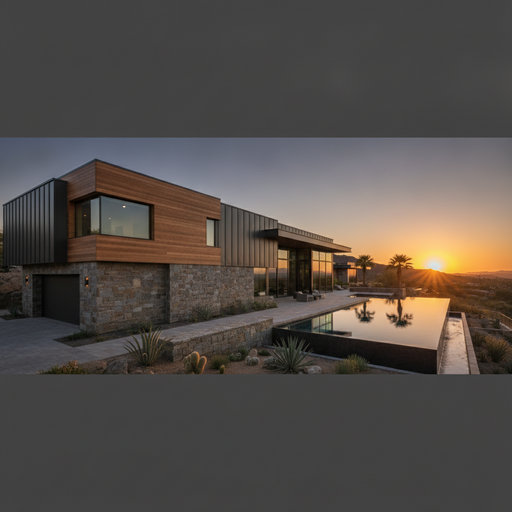
Who says you have to pick just one? The most breathtaking custom homes often use a “mixed-media” approach. Imagine a house where the ground floor is wrapped in heavy, dark basalt stone, while the upper floor features warm cedar slats and large glass panels framed in black steel. This layering of textures creates visual interest and can be used to highlight different architectural features.
When mixing materials, think about balance. Use one dominant material (roughly 60-70% of the surface) and use the others as accents. Contrast is your friend. Pair the roughness of stone with the smoothness of metal. Combine the organic warmth of wood with the industrial coldness of concrete. This interplay is what turns a simple building into a work of art.
The Practical Side: Climate and Context
While aesthetics are vital, your choice of custom exterior materials must also be a functional one. Your home’s “skin” is its first line of defense. If you live in a coastal area, salt spray will eat through certain metals and rot unprotected woods. In a desert climate, high UV exposure will fade dark paints and cause some materials to warp.
- High Humidity: Focus on moisture-resistant materials like fiber cement or naturally oily woods like Ipe.
- Arid Climates: Stucco and light-colored stone are excellent for reflecting heat and staying cool.
- Freezing Tundra: Ensure your materials can handle the freeze-thaw cycle without cracking; natural stone and metal are often champions here.
Beyond climate, consider the context of your neighborhood. A custom home should stand out, but it shouldn’t look like an alien spaceship landed in a historical district. Look at the local palette and the historical materials used in your area. You can honor tradition while still using modern custom materials to put your unique spin on the design.
Conclusion: Crafting Your Legacy
Choosing custom exterior materials is a journey of discovery. It’s about finding the intersection between what you love to look at and what will protect your family for years to come. Whether you choose the rugged permanence of stone, the living history of wood, or the precision of metal, your choice will tell the world who you are and what you value.
Take your time. Touch the samples. Look at them in the morning light and the evening shadow. Your home is the backdrop of your life’s story—make sure the cover is as beautiful as the chapters within. By selecting the right materials today, you aren’t just building a house; you are crafting a legacy that will stand tall against the wind, the rain, and the passage of time.