
The Story of the Invisible House
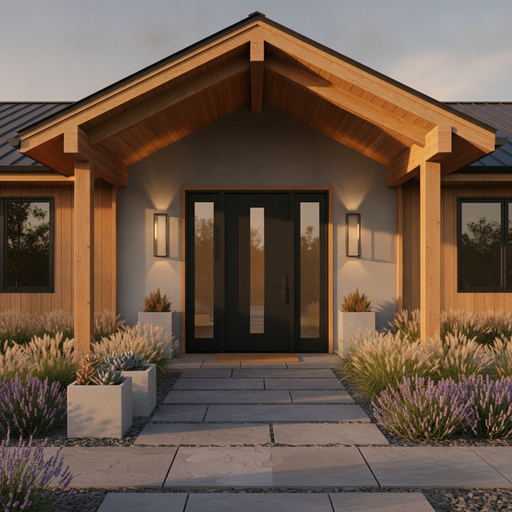
Imagine driving through a quiet suburbaeighborhood at dusk. You pass row after row of houses, but your eyes glide right over them. Many of these are classic American ranch homes—functional, sturdy, and low-profile. But then, you see it. A house that stands out not because it is the biggest, but because it feels like an invitation. The front entry glows with warmth, the textures of wood and stone catch the light, and the walkway seems to pull you toward the front door.
SUBMIT YOUR DETAILS FOR
That is the power of a well-designed front entry. For many ranch-style homeowners, the struggle is real: the long, horizontal “rambling” nature of the architecture can often result in a flat, uninspiring facade. Because ranch homes are typically one story, the entry can easily get lost in the expanse of the roofline. However, this architectural simplicity is actually a blank canvas. Whether you are looking to create a modern farmhouse look, a mid-century masterpiece, or a cozy cottage feel, your ranch home’s front entry is the perfect place to start your transformation.
Understanding the Ranch “Canvas”
Before we dive into the design elements, we have to understand what makes a ranch home unique. Developed in the 1920s and exploding in popularity after World War II, the ranch house was designed for “indoor-outdoor living.” It’s low to the ground, emphasizing horizontal lines over vertical height. While this makes the home accessible and grounded, it can also make the front door feel “tucked away” or overshadowed by a large garage.
The goal of a great front entry design for a ranch is to create a focal point. You want to tell your guests, “This is where the heart of the home is.” By breaking up the horizontal monotony and adding layers of depth, you can turn a dated exterior into a modern showstopper.
The Heart of the Entry: Choosing the Right Front Door
Think of your front door as the jewelry of your home. It is the first thing people touch and the last thing they see when they leave. For a ranch home, the door needs to pack a punch. Since the house is low, you don’t have massive columns or grand staircases to do the talking for you; the door has to carry the weight.
- The Bold Pop of Color: A classic ranch painted in gray or white can be instantly transformed with a front door in “Naval Blue,” “Heritage Red,” or even a soft “Sage Green.” A bold color provides an immediate visual anchor.
- The Mid-Century Modern Vibe: If your ranch has those classic 1950s lines, consider a door with asymmetrical glass lites. Dark walnut or mahogany wood finishes paired with frosted glass can honor the home’s history while looking incredibly contemporary.
- The Farmhouse Pivot: For a more rustic look, a Dutch door (where the top half opens independently) adds immense charm and fits the “informal” vibe that ranch homes are known for.
Adding Architectural Depth with Porticos and Overhangs
One of the biggest complaints about ranch homes is that they look “flat.” One of the most effective ways to solve this is by building out. A portico—a small porch leading to the entrance of a building, supported by columns or enclosed by walls—can completely change the silhouette of your home.
Adding a gabled portico (a pointed roof over the door) breaks the long, flat roofline of the ranch and draws the eye upward, creating a sense of height. If a full construction project isn’t in the budget, even a modern timber awning with black metal brackets can provide that much-needed shadow line and protection from the elements. This adds a “3D” effect to the house that makes it feel much more expensive and custom-built.
Lighting: Setting the Evening Mood
Landscape and entry lighting are often afterthoughts, but they are the secret sauce of curb appeal. In the world of ranch home design, lighting serves two purposes: safety and drama. Because ranch homes sit low, they can look dark and imposing at night if not lit correctly.
I recommend a “layered” approach to lighting. Start with oversized sconces on either side of the door. The scale is important here—most homeowners choose lights that are too small. Aim for fixtures that are at least 1/4 to 1/3 the height of the door. Next, add path lighting along the walkway to guide the eye toward the entry. Finally, use low-voltage uplighting oearby trees or architectural features like stone pillars. This creates a glow that makes the home feel lived-in and safe.
The Walkway: The Red Carpet Treatment
The journey to your front door starts at the driveway or the sidewalk. A straight, narrow concrete path is functional, but it isn’t beautiful. To elevate a ranch entry, consider widening the walkway. A wider path feels more luxurious and welcoming.
Materials matter immensely. Using large-scale pavers with “grass joints” (small strips of turf or moss between stones) can soften the look of a brick or wood-sided ranch. Alternatively, flagstone or bluestone adds a natural, organic texture that complements the grounded nature of a one-story home. If you really want to go the extra mile, curve the walkway. A gentle “S” curve creates a sense of discovery and allows for more interesting landscaping pockets along the way.
Landscaping as a Frame
Landscaping for a ranch home should be about “framing,” not “hiding.” Many older ranch homes are hidden behind overgrown “foundation plantings”—those massive evergreen bushes that cover the windows and make the house look like it’s being swallowed by the forest.
Clear out the old, overgrown shrubbery and replace it with layers. Start with taller plants at the corners of the house to soften the edges. Closer to the entry, use a mix of textures and heights. For a modern look, think of ornamental grasses and structural plants like Agave or Boxwood. For a traditional look, layering hydrangeas, lavender, and hostas creates a lush, welcoming “cottage” feel. Remember to keep the plants near the front door lower so they don’t block the view of your beautiful new entry.
The Final Details: Hardware and Decor
Once the big elements are in place, it’s time for the “styling.” This is where you can let your personality shine. For a ranch home, less is often more, but the items you choose should be high quality.
- House Numbers: Swap out those generic plastic numbers for modern, oversized floating digits. Choose a finish that matches your door hardware—matte black for a modern look, or brushed brass for a touch of warmth.
- The Welcome Mat: Don’t settle for a tiny mat. Layer a large outdoor rug (like a striped or jute rug) with a smaller coir “Welcome” mat on top. This adds texture and makes the entry feel like a room of its own.
- Planters: Flank the door with two large, tall planters. Using height in your planters helps counteract the low profile of the ranch. Fill them with seasonal greenery to keep the entry looking fresh year-round.
Conclusion: Your Home’s Handshake
Designing the front entry of your ranch home is about more than just resale value—though it certainly helps with that. It is about creating a “handshake” between your home and the world. It’s the feeling of pride you get when you pull into the driveway after a long day, and the sense of warmth your friends feel before they even step inside.
By focusing on height, texture, and a clear focal point, you can take the “invisible” ranch and turn it into the jewel of the neighborhood. You don’t need a massive budget to make a massive impact. Start with a fresh coat of paint on the door, upgrade your lighting, and clear out the overgrown bushes. From there, your ranch home’s true character will begin to shine through, proving that some of the best things really do come in one-story packages.