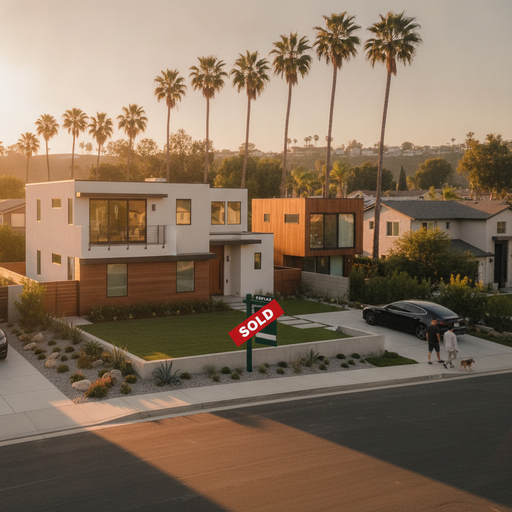

The Golden State Crossroads
For decades, the California Dream was synonymous with a white picket fence, a sun-drenched backyard, and a steady climb in property value. However, if you have glanced at a real estate app lately, you know that the narrative has shifted. From the tech-heavy corridors of Silicon Valley to the sprawling suburbs of the Inland Empire, the California residential housing market is currently in a state of fascinating, albeit stressful, transformation. As we look toward the remainder of 2024 and into 2025, many are asking: Is the dream still attainable, or are we witnessing a fundamental shift in how Californians live?
SUBMIT YOUR DETAILS FOR
To understand where we are going, we have to look at the stories of people like Sarah and Mark, a couple in their early thirties living in San Diego. They have a healthy household income and a decent down payment saved. In almost any other state, they would be “power buyers.” In California, they are currently on the sidelines, watching mortgage rates and inventory levels like hawks. Their story is the story of millions, and it perfectly encapsulates the current “wait-and-see” atmosphere that defines the market today.
The Impact of the “Golden Handcuffs”
One of the most significant factors shaping the current outlook is what economists call the “lock-in effect,” or more colloquially, the “Golden Handcuffs.” During the pandemic, millions of California homeowners refinanced their mortgages at historic lows—some as low as 2.5% or 3%. Today, with mortgage rates hovering much higher, these homeowners are staying put. Why would someone trade a $2,500 monthly payment for a $5,000 payment on a similar or even smaller house?
This phenomenon has created a massive inventory drought. Because existing homeowners aren’t moving, the “churn” of the market has slowed to a crawl. For buyers like Sarah and Mark, this means fewer choices and intense competition for the few homes that do hit the market. Looking ahead, experts predict that until interest rates see a more significant and sustained decline, inventory will remain tight, keeping home prices stubbornly high despite lower demand.
Prices: Defying Gravity?
In a typical economic cycle, high interest rates usually lead to a significant drop in home prices. However, California’s market is anything but typical. Because the supply is so restricted, prices have remained remarkably resilient. In many coastal regions, we are even seeing modest price increases year-over-year.
The outlook for 2025 suggests a “sideways” movement or modest growth. We aren’t likely to see the 20% aual jumps of the post-pandemic era, but a crash also seems unlikely. The demand for California real estate is backed by high-income sectors like tech, aerospace, and entertainment. As long as the jobs are here, the demand for housing will persist, even if the price of entry is steep.
The Rise of the ADU and “Missing Middle” Housing
If you drive through neighborhoods in Los Angeles or San Jose, you will notice a new trend: the Accessory Dwelling Unit (ADU). California has passed several aggressive laws in recent years to combat the housing shortage by making it easier for homeowners to build “gray flats” or backyard cottages. This isn’t just about housing grandma anymore; it’s a vital part of the residential outlook.
For many, the ADU is a financial lifeline. Homeowners are building them to generate rental income to help pay their own mortgages, while renters find them a more affordable alternative to traditional apartments. We are also seeing a push for “missing middle” housing—duplexes, triplexes, and townhomes—as the state legislature continues to challenge local zoning laws that once only allowed for single-family homes. This shift toward density is the new frontier of the California residential landscape.
Migration Patterns: The Inland Shift
While the headlines often scream about people leaving California, the internal migration story is more nuanced. Many residents aren’t leaving the state; they are moving inland. The “Coastal Exodus” has breathed new life into the Central Valley and the Inland Empire. Cities like Riverside, Sacramento, and Fresno are seeing increased demand as buyers seek more square footage for their dollar.
This shift has been accelerated by the permanence of remote and hybrid work. If you only have to commute to a San Francisco or Los Angeles office twice a week, a two-hour drive becomes manageable in exchange for a four-bedroom house with a pool. However, this trend is also driving up prices in these historically affordable areas, creating new challenges for local residents in those communities.
The Climate and Insurance Wildcard
One caot discuss the California housing outlook without mentioning the growing impact of climate change and the subsequent insurance crisis. Major insurers have limited or paused new homeowners’ policies in the state due to wildfire risks. This has added a new layer of complexity to the buying process.
Prospective buyers now have to factor in the “FAIR Plan” (the state’s insurer of last resort) and significantly higher premiums. In some high-risk areas, the cost of insurance is becoming a deal-breaker, affecting property values and how lenders view certain zip codes. This will continue to be a major headwind for the residential market throughout 2025.
Conclusion: A Market of Resilience and Adaptation
The California residential housing outlook is a tale of two realities. On one hand, the barriers to entry have never been higher, characterized by limited inventory, high interest rates, and insurance hurdles. On the other hand, the state remains an economic powerhouse with a standard of living that continues to draw people to its shores and mountains.
For buyers, the strategy for 2025 will likely involve compromise—looking further inland, considering a townhome instead of a detached house, or exploring the potential of properties with ADU potential. For sellers, the market remains favorable due to low competition, but realistic pricing is more important than ever as buyers become more sensitive to monthly costs.
Ultimately, the California Dream isn’t dying; it’s evolving. It is becoming more dense, more diverse in its geography, and more creative in its financing. While the road ahead may be bumpy, the allure of the Golden State remains a powerful force in the American real estate landscape. Whether you are a first-time buyer or a seasoned investor, staying informed and adaptable is the key to navigating this unique and ever-changing market.