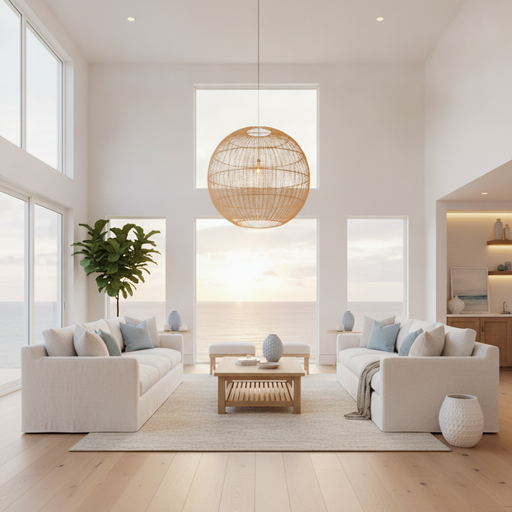

The Essence of Coastal Living and Light
Imagine walking into a room where the air feels lighter, the colors seem softer, and the stress of the day simply melts away. That is the magic of coastal design. It is more than just a style; it is a feeling of being perpetually on vacation, where the rhythm of the waves dictates the pace of life. While many people focus on linen sofas and seashell decor, the true secret to a successful coastal home lies in how you illuminate it. Lighting is the “jewelry” of your home, and in a coastal setting, it needs to reflect the organic beauty of the seaside.
SUBMIT YOUR DETAILS FOR
Coastal lighting design is all about balance. It is about capturing the brilliance of the midday sun while maintaining the cozy, intimate warmth of a beachside bonfire at dusk. Whether you live right on the shoreline or in a landlocked suburbaeighborhood, you can bring that breezy, oceanic vibe into your space through thoughtful lighting choices. In this guide, we will explore how to layer light, choose the right materials, and create an atmosphere that feels both sophisticated and incredibly relaxed.
Embracing Natural Textures: Wicker, Rattan, and Seagrass
One of the easiest ways to signal a coastal theme is through the materials you choose for your fixtures. Coastal design leans heavily on the “organic,” drawing inspiration from the textures found along the coast. Think of the weathered wood of a pier, the woven baskets of a local fish market, or the dried seagrass on a dune.
Woven pendants—made from rattan, wicker, or jute—are the hallmarks of modern coastal style. When you turn these lights on at night, the woven patterns cast intricate, dancing shadows across your walls, mimicking the way sunlight filters through palm fronds or beach grass. This adds a layer of visual interest and texture that flat, metal fixtures simply caot provide. For a large dining area or a high-ceilinged living room, consider oversized rattan domes. They create a focal point that feels light and airy rather than heavy and imposing.
The Charm of Driftwood and Weathered Wood
If you prefer a more “shabby chic” or rustic coastal look, driftwood lighting is a spectacular choice. A chandelier made from authentic or faux driftwood brings a sculptural element into the room. It tells a story of the ocean’s power and the beauty of natural decay. These pieces work beautifully in entryways or over kitchen islands, providing an immediate sense of “place” the moment someone walks through the door.
Transparency and the Magic of Glass
Coastal homes are often designed to maximize views of the outdoors. You don’t want bulky lighting fixtures blocking the sightline to a window or cluttering a small room. This is where glass lighting comes into play. Clear glass pendants allow the eye to travel through them, maintaining an open and spacious feel.
To take it a step further, look for “seeded” glass. This type of glass contains tiny bubbles that look like sea foam or droplets of water. It diffuses the light slightly, creating a soft, romantic glow. If you want to introduce a pop of color, consider recycled glass fixtures in shades of “sea glass”—soft blues, muted greens, and sandy aquas. These subtle hues can tie your entire color palette together without overwhelming the space with saturated tones.
Layering Light for Every Mood
A common mistake in home design is relying on a single overhead light source. In a coastal home, layering is essential to mimic the changing light of the coast throughout the day. To achieve a professional look, you need three types of lighting: ambient, task, and accent.
- Ambient Lighting: This is your general light source, like a large central chandelier or recessed ceiling lights. It provides the base level of brightness.
- Task Lighting: This is focused light for specific activities. In a coastal kitchen, this might be sleek, minimalist pendants over the island where you prep meals. In a reading nook, it could be a brass floor lamp with a linen shade.
- Accent Lighting: This is where you get creative. Use wall sconces to highlight a piece of coastal art or use LED strips inside shelving to make your collection of white coral and sea glass glow.
By layering these lights, you can transition your home from a bright, energetic morning space to a dim, cozy sanctuary for the evening. Always install dimmer switches; they are the most important tool in your coastal lighting kit, allowing you to control the “vibe” with a simple slide of a finger.
The Nautical Influence: Lanterns and Brass
For those who love a more traditional or “Cape Cod” coastal style, nautical-inspired fixtures are a must. This look draws from the functional beauty of ships and lighthouses. Think of sturdy lanterns, porthole-style wall sconces, and fixtures with heavy rope detailing.
Polished chrome or nickel can feel a bit cold, so many coastal designers are turning toward “living finishes” like unlacquered brass or copper. These metals develop a patina over time, much like the hardware on a boat exposed to salty air. This adds a sense of history and authenticity to your home. A pair of large, brass lanterns hanging over a kitchen island creates a timeless look that feels both sturdy and elegant.
Choosing the Right Color Temperature
The “color” of the light bulbs you choose is just as important as the fixtures themselves. Light color is measured in Kelvins. In a coastal home, you want to avoid “cool white” bulbs (4000K-5000K), which can make your beautiful blue and white decor look sterile and hospital-like.
Instead, aim for “warm white” (around 2700K to 3000K). This temperature mimics the “golden hour”—that magical time just before sunset when everything looks warm and inviting. It enhances the natural wood tones in your furniture and makes your space feel cozy. However, in bathrooms or laundry rooms where you need clarity, a slightly cooler 3000K-3500K bulb can help the whites look crisp and clean without being harsh.
Extending the Glow: Coastal Outdoor Lighting
The coastal lifestyle is all about indoor-outdoor living. Your lighting design shouldn’t stop at the back door. To create a seamless transition, use similar materials and styles for your patio or deck.
String lights (often called Edison or bistro lights) are perfect for creating a “beach boardwalk” atmosphere in your backyard. Combine these with solar-powered path lights tucked into dune grass or among white pebbles. If you have a covered porch, a damp-rated outdoor ceiling fan with a light kit in a woven material can keep the breeze moving while providing a soft glow for late-night conversations under the stars.
Conclusion: Setting Your Own Coastal Scene
Designing a coastal home is about capturing the essence of the shoreline—its textures, its colors, and most importantly, its light. By choosing fixtures made from natural materials like rattan and seagrass, incorporating the transparency of sea glass, and carefully layering your light sources, you can create a sanctuary that feels like a breath of fresh air.
Remember that lighting is personal. It’s about how you want to feel when you walk through your door after a long day. Whether you prefer the rugged look of driftwood and brass or the clean, modern lines of clear glass and white linen, let the ocean be your muse. With the right lighting, every day can feel like a walk on the beach.