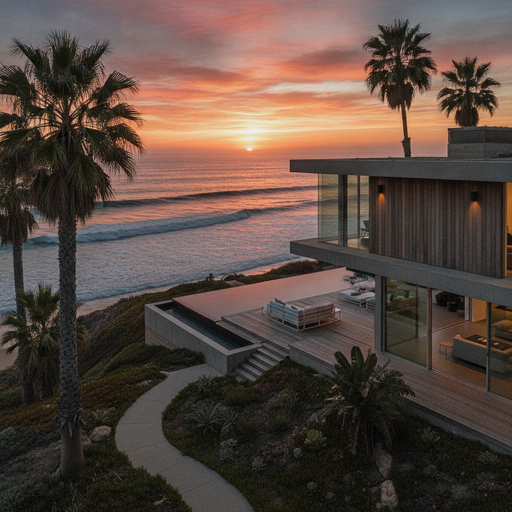

Imagine waking up to the sound of rhythmic waves crashing against the shore, the smell of salt air wafting through your window, and the soft, golden California sun painting your living room in hues of orange and pink. For decades, this has been the ultimate American dream. From the rocky cliffs of Big Sur to the sun-drenched boardwalks of San Diego, the California coast represents more than just geography; it represents a lifestyle of prestige, opportunity, and natural beauty.
SUBMIT YOUR DETAILS FOR
However, if you have recently tried to browse Zillow for a bungalow in Santa Monica or a condo in La Jolla, you have likely encountered a sobering reality. The demand for California coastal housing is not just high—it is relentless. Despite rising interest rates, economic shifts, and the much-discussed “California exodus,” the coastal market remains one of the most competitive and expensive landscapes in the world. To understand why, we have to look beyond the price tags and dive into the unique story of the Golden State’s shoreline.
The Magnetic Pull of the Pacific
To understand the demand, you first have to understand the allure. Sarah, a software engineer from the Midwest, recently moved to Santa Barbara. “I could have bought a mansion in Ohio for what I pay for a two-bedroom apartment here,” she says. “But in Ohio, I didn’t have the mountains on one side and the ocean on the other. I didn’t have 300 days of perfect weather. Here, my quality of life isn’t measured by square footage, but by how many hours I spend outside.”
This sentiment is the heartbeat of coastal demand. The “Mediterranean climate” of coastal California is a rare commodity globally. It fosters a lifestyle centered on health, outdoor recreation, and a deep coection to nature. When you combine this with the presence of global economic powerhouses—Silicon Valley in the north and the entertainment and aerospace industries in the south—you get a perfect storm. People don’t just want to live here; they feel they need to be here for their careers and their well-being.
The Inventory Crisis: A Game of Musical Chairs
If demand is the unstoppable force, the California coastline is the immovable object. Unlike the sprawling suburbs of Texas or Arizona, California’s coast is geographically constrained. To the west is the Pacific Ocean, and to the east, we often find protected mountain ranges or established urban density. There is simply no more room to build “out.”
Furthermore, the California Coastal Commission, established in the 1970s, plays a vital role in protecting the environment and ensuring public beach access. While this is wonderful for conservation, it makes the permitting process for new housing incredibly slow, expensive, and restrictive. We are essentially playing a massive game of musical chairs, but instead of removing chairs, we just keep adding more players while the number of seats stays exactly the same.
The “NIMBY” Factor
We caot talk about supply without mentioning the “Not In My Backyard” (NIMBY) sentiment. Many current coastal residents, protective of their views, property values, and neighborhood character, have historically resisted high-density developments. This has led to a landscape dominated by single-family homes in areas that, by all economic logic, should be high-rise residential hubs. This artificial cap on density pushes prices higher and higher as more buyers fight over the same limited pool of historic bungalows and mid-century modern gems.
The Remote Work Revolution: A Plot Twist
When the pandemic hit in 2020, many analysts predicted the “death of the city” and the collapse of coastal California real estate. With the rise of Zoom and remote work, why would anyone pay a premium to live in a crowded coastal zip code? For a moment, it seemed the critics were right. Some people moved to Boise, Austin, or Lake Tahoe.
However, the narrative shifted quickly. Instead of devaluing the coast, remote work actually redefined what people wanted from their homes. If you are going to work from home eight hours a day, wouldn’t you rather do it in a place where you can surf at lunch or walk on the beach at 5:00 PM? The demand didn’t disappear; it evolved. Buyers began looking for larger homes with home offices, still within striking distance of the coast. This “race for space” near the water only served to accelerate price appreciation in coastal suburbs that were previously considered “secondary” markets.
The Demographics of the Modern Buyer
Who is actually buying these multi-million dollar coastal properties? It’s a mix of several powerful groups:
- Tech and Biotech Professionals: High-earners from the Bay Area and San Diego’s “Biotech Beach” continue to be a primary driver of the market.
- The Great Wealth Transfer: As Baby Boomers pass down assets to Milleials, we are seeing a surge of “down-payment gifts” that allow younger buyers to enter expensive coastal markets they otherwise couldn’t afford on salary alone.
- Institutional Investors: Large firms see California coastal real estate as a “safe haven” asset, similar to gold or blue-chip stocks. They know that while the market may fluctuate, the scarcity of the land ensures long-term value.
- Foreign Investment: Despite various global economic shifts, California remains a top destination for international buyers looking for stability and luxury.
New Laws and the Glimmer of Hope
In response to the crushing demand and lack of supply, the State of California has recently passed several landmark pieces of legislation. Laws like SB 9 and SB 10 aim to end “exclusionary zoning” by allowing homeowners to build Accessory Dwelling Units (ADUs) or split their lots to create more housing units.
You may have noticed a “gray flat” or a tiny house popping up in a neighbor’s backyard lately. These ADUs are becoming the “secret weapon” for coastal housing. They allow families to stay together, provide rental income to offset massive mortgages, and—most importantly—add much-needed units to the housing stock without changing the fundamental aesthetic of the neighborhood. While it’s not a silver bullet, it is a significant step toward addressing the demand gap.
What Does the Future Hold?
As we look toward the next decade, the demand for California coastal housing shows no signs of significant cooling. Even with higher interest rates, the “locked-in effect”—where current homeowners refuse to sell because they have ultra-low mortgage rates from years ago—is keeping inventory at historic lows. This ensures that whenever a decent home hits the market, it is met with multiple offers.
For the prospective buyer, the strategy has shifted from “finding a bargain” to “getting a foot in the door.” Whether it’s buying a fixer-upper, partnering with family, or looking at “emerging” coastal neighborhoods that are currently being revitalized, the goal remains the same: securing a piece of the most coveted coastline in the world.
Conclusion
The story of California coastal housing is a story of tension between the desire for a dream lifestyle and the physical limits of our geography. It is a market defined by scarcity, protected by law, and fueled by the relentless ambition of those who want to call the Pacific shore their home. While the prices may be daunting and the competition fierce, the allure of the California coast remains undiminished. As long as the sun shines on the Pacific and the waves hit the sand, the demand for a home by the sea will continue to be the cornerstone of the California real estate market.