
The Sun-Drenched Dream and the Reality of the Receipt
Imagine waking up to the sound of rustling palm fronds and the distant scent of salt air. For decades, this has been the “Florida Dream” for retirees, digital nomads, and young families alike. However, in recent years, that dream has come with a much steeper price tag. As traditional real estate prices in the Sunshine State have skyrocketed, many hopeful residents are looking at an alternative that was once tucked away in the shadows of the housing market: mobile and manufactured homes.
SUBMIT YOUR DETAILS FOR
I want to tell you about Sarah and Dave. They are a couple from the Midwest who spent thirty years dreaming of a Florida retirement. When they finally started browsing Zillow for a modest three-bedroom house in Sarasota or Fort Myers, they were met with a harsh reality. Average home prices were hovering well above $450,000, and that didn’t even include the soaring insurance premiums. It felt like the gate to paradise was locked. That is, until they started looking at modern manufactured housing. Their journey highlights a crucial question for anyone looking to move south: In today’s economy, how does the affordability of a mobile home truly compare to a traditional house in Florida?
Breaking Down the Initial Purchase Price
The most immediate and obvious difference between traditional site-built homes and mobile homes is the entry price. In Florida, the gap is not just a small margin; it is a canyon. While a standard single-family home in a decent Florida suburb might start at $400,000, a high-end, brand-new manufactured home can often be purchased for between $120,000 and $180,000.
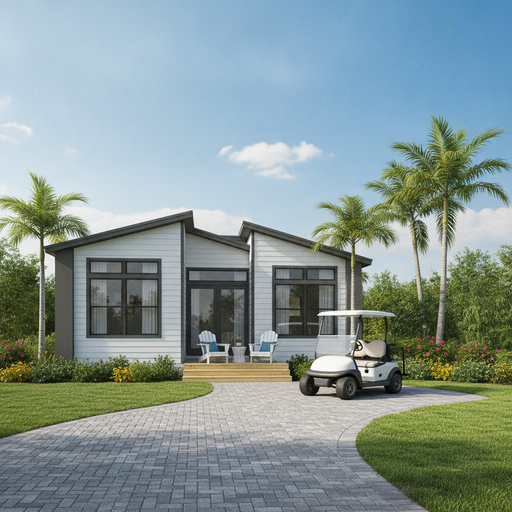
When we talk about “mobile homes,” it is important to distinguish between older units and modern “manufactured homes.” Since 1976, the HUD code has ensured these homes are built to rigorous standards. Today’s manufactured homes often feature granite countertops, vaulted ceilings, and energy-efficient appliances. For Sarah and Dave, the realization that they could get a brand-new, 1,500-square-foot home for less than half the price of a fixer-upper bungalow was a game-changer. In terms of price per square foot, mobile homes in Florida typically cost 40% to 50% less than site-built counterparts.
The Land Factor: To Own or To Rent?
This is where the affordability comparison gets a bit more complex. When you buy a traditional house, you own the dirt beneath it. With mobile housing in Florida, you have two primary paths, and each changes your monthly budget significantly.
1. Land-Lease Communities (Lot Rent)
In many Florida “parks,” you own the home but lease the land. This lowers your initial purchase price because you aren’t buying real estate, just the structure. However, you will pay “lot rent,” which in Florida can range from $600 to $1,200 per month depending on the amenities. These parks often include lawn maintenance, trash pickup, and access to pools or clubhouses. For some, this is a convenient “lifestyle fee,” but for others, it’s an unpredictable recurring cost that can rise aually.
2. Resident-Owned Communities or Private Land
Alternatively, you can place a manufactured home on a lot you own. This requires a higher upfront investment but eliminates lot rent. In this scenario, your monthly costs look much more like a traditional mortgage, though usually still at a lower total volume. From a long-term equity perspective, owning the land is almost always the smarter financial move, as land appreciates while the structure itself may depreciate over time.
The Elephant in the Room: Insurance and Taxes
You caot talk about Florida housing without talking about the weather. Hurricanes are a reality, and insurance companies know it. Historically, insuring a mobile home was significantly more expensive relative to its value than a site-built home. However, the gap is narrowing due to stricter building codes for manufactured homes located in “Wind Zone 3” (the highest rating for coastal areas).
Property taxes offer another point of comparison. In Florida, if you own a mobile home but lease the land, you generally do not pay traditional real property taxes. Instead, you pay an aual “Decal” fee, which is significantly cheaper—often less than $100. If you own both the home and the land, you are taxed at the standard real property rate, but because the assessed value of a manufactured home is often lower than a mansion, your total tax bill remains lower than that of a traditional homeowner.
Financing: The Hidden Hurdle
Sarah and Dave quickly discovered that getting a loan for a mobile home isn’t the same as getting a standard 30-year fixed mortgage. If the home is on leased land, it is often classified as “chattel” (personal property) rather than “real property.”
- Chattel Loans: These often have higher interest rates (sometimes 2-5% higher than standard mortgages) and shorter repayment terms.
- FHA and VA Loans: If the manufactured home is permanently affixed to land you own and meets specific criteria, you can qualify for FHA or VA financing, which brings the interest rates down to competitive levels.
When comparing affordability, you must look beyond the sticker price. A $150,000 home with a 9% interest rate might have a similar monthly payment to a $220,000 home with a 6% rate. Always run the numbers on the total monthly “carrying cost.”
Maintenance and Longevity
A common myth is that mobile homes fall apart in ten years. Modern manufactured homes are built in climate-controlled factories, protecting materials from the Florida humidity during construction. However, they do require specific maintenance. Roof-overs and skirt repairs are unique to mobile housing.
Traditional homes, built with concrete block (very common in Florida), are incredibly durable but can be expensive to repair when systems like central AC or the roof fail. Generally, maintenance on a manufactured home is more manageable for a DIYer or someone on a fixed income, but the “resale value” of a traditional home typically holds steadier over a 20-year period.
The Lifestyle Dividend
Beyond the spreadsheets, there is a lifestyle component to Florida’s mobile home communities that adds “value” in a different way. Many manufactured home parks in Florida are “55+ communities” that function like high-end resorts. They offer social clubs, pickleball courts, and organized events. For someone like Sarah and Dave, the affordability of the home allowed them to keep more of their savings for travel, dining out, and enjoying their golden years, rather than being “house poor” in a massive traditional suburb.
Conclusion: Is It Right For You?
So, is mobile housing in Florida truly more affordable? The answer is a resounding yes, but with a few asterisks. If your goal is to lower your monthly overhead and enjoy the Florida sun without a massive debt burden, a manufactured home is an unbeatable option. It allows for a higher quality of life on a smaller budget.
However, if you are looking for an investment that will double in value over the next decade, a traditional site-built home on a piece of land remains the gold standard. For Sarah and Dave, they chose a brand-new manufactured home in a resident-owned co-op near Venice. They paid $160,000, have a small monthly HOA fee instead of lot rent, and their total living expenses are roughly 60% less than they would have been in a traditional house. For them, the affordability wasn’t just about the money—it was about the freedom that money bought them. In the Florida housing market of 2024, that freedom is the greatest luxury of all.